

How Match Sliotars from Pakistan Can Cut Bulk Order Costs for GAA Clubs and Brands
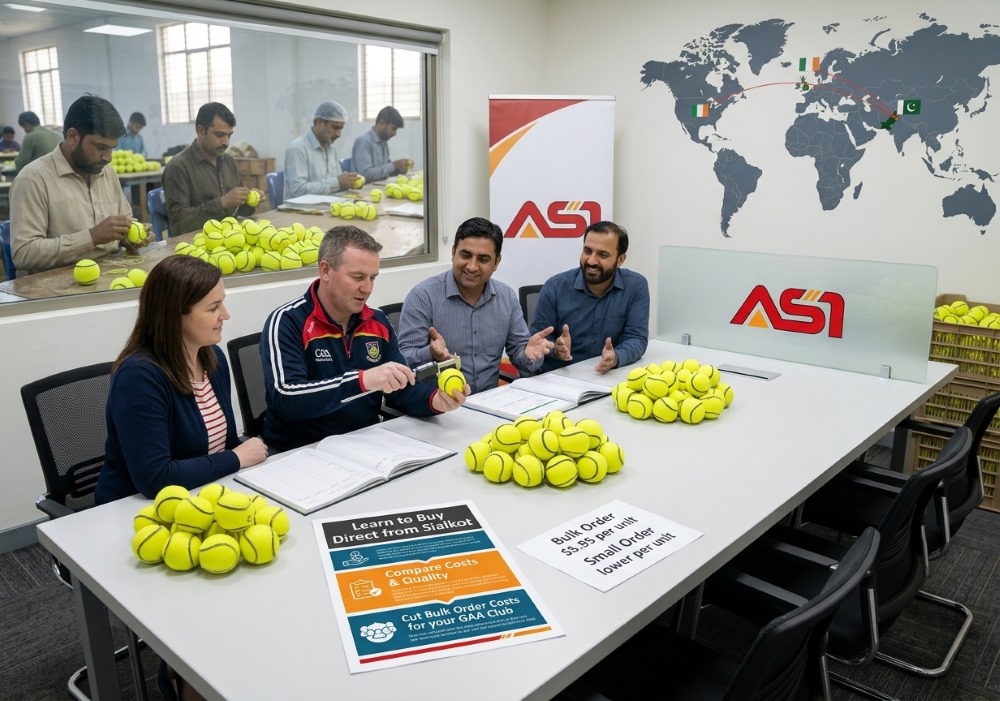
Buying match sliotars straight from a Pakistani factory can cut your cost per ball by a large margin. Savings come from skipping middlemen, lower labor costs, and fair bulk pricing. Sialkot, a city in Punjab, Pakistan, has made sports balls for over a century. Its makers can produce leather sliotars (hurling balls) to your design, at the volume you need.
There is one big rule. Savings only matter if the ball is good. Check the specs, test the samples, and confirm approval rules with the GAA before you place a large order.
This guide shows you how to do that. It covers why Sialkot is a smart source, what a good sliotar needs, how the costs compare, and how to order safely.
What Is a Sliotar (hurling ball)? A Quick Refresher
A sliotar is the ball used in hurling and camogie. It is small, hard, and fast.
Here is the basic make-up:
- Core: Made of cork, rubber, or a mix. Many modern balls use a polyurethane (PU) core.
- Cover: Two pieces of leather stitched together in a figure-eight style.
- Rim: A raised seam that runs around the ball. Players grip it, and the ball flies true because of it.
A standard match sliotar is about 65 to 69 mm across. It weighs about 100 to 110 grams. These figures follow the GAA’s playing rules. Always check the current GAA Official Guide, since rules can change.
Why the Ball Matters So Much
Hurling is one of the fastest field games on earth. A ball that is too soft, too heavy, or badly stitched will:
- Lose shape after a few matches
- Bounce in odd ways
- Split at the seam
- Hurt a player’s hands
A poor ball makes a club look bad. It also costs more in the long run because you must replace it sooner.
Why Sialkot Is a Top Source for Sports Balls
A Long History of Ball Making
Sialkot has made sports goods since the late 1800s. The trade began with repairs of tennis and cricket gear for British soldiers. Over time, the city grew into one of the world’s main sports goods hubs.
Sialkot is best known for hand-stitched footballs. Many well-known soccer brands have used Sialkot factories. That skill in stitching leather and working to tight rules carries over well to sliotars.
Skills That Match Sliotar Making
Making a sliotar needs:
- Careful leather cutting
- Neat, strong hand stitching
- Control of ball weight and size
- Good quality checks
Sialkot workers do all of these every day. Many factories already work with export buyers in Europe and North America. They know about packaging, labeling, and paperwork.
A Full Supply Chain in One City
Most parts of the trade sit close together in Sialkot:
- Leather suppliers
- Printing and logo shops
- Packaging makers
- Shipping agents
Short distances between steps mean faster work and lower costs. That helps keep your price down.
How Direct Factory Sourcing Cuts Costs
The Usual Supply Chain
When you buy from a local shop or big retailer, the ball often passes through many hands:
- Factory
- Exporter or agent
- Importer
- Wholesaler
- Retailer
- Your club
Each step adds a margin. By the time the ball reaches you, the price can be double or triple the factory price.
The Direct Chain
With direct sourcing, it looks like this:
- Factory
- Your club or brand
You still pay for shipping, duty, and tax. But you remove several layers of markup.
Where the Savings Come From
| Cost Area | Typical Retail Route | Direct Factory Route |
| Middleman margins | Several layers | None or one |
| Labor cost | Higher in Ireland/UK | Lower in Pakistan |
| Bulk discounts | Small or none | Tiered, often generous |
| Custom branding | Extra fee, small runs | Often included at volume |
| Lead time | Short (stock items) | Longer (made to order) |
Note: These are general patterns, not fixed prices. Real quotes vary by leather grade, core type, order size, and season.
A Simple Example
Say a club needs 500 match sliotars (hurling balls) for the season.
- At a retail price of €12 per ball, that is €6,000.
- At a direct factory price of, for example, €6 per ball plus €1.50 for shipping and duty, that is €3,750.
In this example, the club saves €2,250. Your numbers will differ. But this shows why many buyers look at direct sourcing. Always get a written quote and add every cost before you compare.
What Makes a Good Match Sliotar?
Cheap is never enough. You need a ball that plays well. Look at these points.
1. Core Type
| Core Type | Feel | Durability | Best For |
| Cork | Traditional, lively | Medium | Premium match play |
| Rubber/cork blend | Balanced | Good | Club matches |
| Polyurethane (PU) | Consistent, firm | High | Training and wet weather |
Many modern match balls use a PU core. It holds its shape well and keeps bounce steady. Ask your supplier which core types they make and what they suggest for your use.
2. Leather Quality
The cover takes a beating. Look for:
- Even thickness across the whole panel
- Smooth finish with no cracks
- Good grip when dry and when damp
Ask for the leather type and thickness in writing.
3. Stitching and Seam
The rim is key to how the ball flies. Check that:
- Stitches are even and tight
- The raised seam is the same height all the way round
- No loose threads show
4. Size and Weight
Weigh and measure every sample. Compare your results to the current GAA specs. A ball that is a few grams off may fail club or county checks.
5. Color and Finish
Most match sliotars are white. Some training balls come in other colors, like yellow or orange. Pick the one that fits your needs and your league rules.
GAA Approval: What You Need to Know
Understand the Rules First
The GAA sets rules for balls used in official games. Some competitions require specific approved or branded balls. This matters a lot for clubs that play in county or national events.
Before you order, do this:
- Read the current GAA Official Guide on ball specs
- Ask your county board which balls are allowed in your competitions
- Ask the supplier if they hold any approval, or if they can make to the spec
Be Careful With Claims
Some sellers say a ball is “GAA approved” without proof. Do not trust the words alone. Ask for:
- Test reports
- Spec sheets
- Clear photos and measurements
- Any approval papers
If a ball isn’t on a competition’s approved list, you can still use it for training, school games, and friendly matches. Many buyers split orders: premium balls for match days, lower-cost balls for drills.
Who Benefits Most From Direct Sourcing?
GAA Clubs
Clubs go through many balls each season. Training sessions wear them out fast. Bulk buying lowers the cost per ball and lets you share the order across several teams.
Tip: Team up with nearby clubs. A joint order of 1,000 balls often gets a better price than 250 each.
Sports Brands and Retailers
If you run a brand, direct sourcing lets you:
- Put your own logo on the ball
- Control the look and packaging
- Set your own retail price with healthier margins
Distributors
Distributors can hold stock and sell to many clubs. Direct pricing gives you room to compete.
Schools and Universities
Schools need balls that last and cost little. A mix of training-grade and match-grade balls usually works best.
Customization Options
Most Sialkot factories offer branding. Common options include:
- Club crest or logo printed on the leather
- Sponsor names
- Custom colors on the seam thread
- Branded boxes or bags
- Your own barcode or label
Tips for Custom Orders
- Send logos as vector files (AI, EPS, or SVG)
- Ask for a digital mock-up before production
- Approve a physical sample before the full run
- Keep print placement away from the seam
Step-by-Step: How to Source Sliotars From Pakistan
Step 1: Define Your Needs
Write down:
- How many balls you need
- Match or training grade
- Core type
- Color and branding
- Your deadline
- Your budget per ball
Step 2: Find and Shortlist Makers
Look for factories with:
- Export experience to Europe or North America
- Clear product pages and photos
- Quick, clear replies
- Willingness to send samples
Step 3: Request Samples
Never skip this. Ask for:
- Two or three samples of each ball type
- Spec sheets
- Clear price quotes at different volumes
Test the samples in real play. Hit them with a hurley. Use them in wet and dry conditions.
Step 4: Run Your Own Tests
Check these on every sample:
| Test | What to Look For |
| Weight | Within spec range |
| Size | Within spec range |
| Rebound | Even bounce on a hard floor |
| Seam strength | No splitting after hard strikes |
| Wet grip | Holds well when damp |
| Wear | Cover stays intact after repeat use |
Step 5: Compare Quotes
Compare the full landed cost. Add:
- Unit price
- Branding fees
- Packaging
- Shipping
- Customs duty and import tax
- Payment fees
Step 6: Agree on Terms in Writing
Your contract or order sheet should list:
- Exact specs and materials
- Quantity and price
- Delivery date
- Payment terms
- What happens if goods do not match the sample
Step 7: Do a Pre-Shipment Check
Before the goods leave, ask for photos and a quality report. You can also hire a third-party inspector. This costs a little but can save you from a bad batch.
Step 8: Plan Shipping and Customs
Sea shipping is cheap but slow. Air is fast but costs more. For ball orders, many buyers use sea freight for big runs and air for small rush orders.
Understanding the Full Cost
Costs to Add Up
Many first-time buyers only look at the unit price. That is a mistake. The true cost includes more.
| Cost Item | Notes |
| Unit price | Drops as volume rises |
| Sample fees | Often refunded against a bulk order |
| Branding setup | May be free at higher volumes |
| Freight | Sea or air |
| Insurance | Small but worth it |
| Import duty and VAT | Varies by country |
| Inspection | Optional but wise |
| Bank or payment fees | Usually small |
Import Rules by Region
Duty and tax rates differ by country and can change. Check current rules with:
- Ireland and the EU: Your national customs office
- UK: HMRC guidance for imported goods
- USA and Canada: Customs and border agencies
A customs broker can help if you are new to importing.
Comparing Your Options
Pakistan vs. Other Sourcing Routes
| Factor | Local Retailer | Irish/UK Brand | Pakistani Factory (Direct) |
| Price per ball | Highest | High | Lowest at volume |
| Minimum order | None | Low | Moderate to high |
| Custom branding | Rare | Limited | Wide range |
| Lead time | Immediate | Short | Several weeks |
| Quality control | Brand-managed | Brand-managed | You manage with testing |
| Best for | Small, urgent needs | Official match use | Bulk, branded, budget-led orders |
When Direct Sourcing Is Not the Best Fit
Be honest about your needs. Direct sourcing may not suit you if:
- You need fewer than a few hundred balls
- You need balls this week
- Your competition demands a specific approved brand
- You have no time to test samples
In these cases, buy locally or mix both methods.
Common Mistakes to Avoid
- Skipping samples. Photos can hide flaws.
- Only comparing unit prices. Landed cost is what counts.
- Ordering too late. Production and shipping take weeks.
- Vague specs. Put everything in writing.
- Ignoring competition rules. Check what is allowed before you buy.
- Paying 100% upfront with a new supplier. Use staged payments where possible.
- Forgetting storage. Keep leather balls dry and cool.
Quality Checklist Before You Pay
Use this list before you approve a bulk order:
- Sample tested in real play
- Weight and size match the spec
- Stitching is even and strong
- Leather type confirmed in writing
- Logo placement approved
- Full landed cost calculated
- Delivery date agreed
- Payment terms are fair
- Return or fix policy confirmed
Real-World Scenarios
Scenario 1: A Club With 8 Teams
A club in Cork needs 600 balls for the year. It buys 200 match balls and 400 training balls. By ordering together and adding the club crest, it lowers its cost per ball and gets a matching look across all teams.
Scenario 2: A New Equipment Brand
A start-up brand in Toronto wants a private-label sliotar. It orders 1,000 balls with its own logo and box. The direct route gives it a margin that a retail-bought ball never could.
Scenario 3: A University Society
A college society in Boston buys 150 training balls. Since the order is small, it joins a group order with two other societies to reach a better price tier.
These are examples to show how buyers think. Your own results will depend on your quote and order size.
Match Sliotars from Pakistan: Cut Bulk Order Costs
Buy direct from Sialkot factories. Skip the middlemen.
Bottom line: direct factory buying lowers the cost per ball. Test samples before you pay for a big order.
Fewer hands, lower price
Retail route
Direct route
Example: 500 match sliotars
Example numbers only. Get real quotes.
What makes a good sliotar
Core
Cork, blend, or polyurethane
Leather
Even, smooth, grippy
Seam
Tight stitches, same height
Size and weight
Match current GAA rules
8 steps to order safely
List your needs
Shortlist makers
Ask for samples
Test them in play
Compare full quotes
Put terms in writing
Check before shipping
Plan freight and customs
Add up the full cost
Who gains most
GAA clubs
Share one order across teams
Brands
Your logo, your margin
Distributors
Room to price well
Schools
Mix match and training balls
Mistakes to avoid
Skipping samples
Comparing only unit prices
Ordering too late
Ignoring competition rules
Ready to optimize your club’s budget?
Request a direct factory quote and custom sample pack today.
ASI Soccers | Sialkot, Pakistan
Frequently Asked Questions
Are sliotars from Pakistan good quality?
Many can be. Sialkot has great skill in hand-stitched leather balls. Quality still depends on the factory. Always test samples before a bulk order.
Can I get GAA-approved sliotars from Pakistan?
Ask the factory about approval and spec compliance. Competitions may need a specific approved ball. Check with your county board first. For training and school use, rules are usually looser.
What is the minimum order quantity?
It varies by factory. Some accept a few hundred balls. Others ask for more, especially for custom branding. Ask for tiered pricing so you can see how the price drops with volume.
How long does an order take?
Plan for several weeks. Production can take a few weeks, and shipping adds more. Sea freight is slower than air. Order well before your season starts.
Can I add my club logo?
Yes. Most makers offer printing or stamping. Send a vector file and ask for a mock-up first.
How much can I save?
Savings depend on your volume, ball type, and shipping costs. Many buyers see big drops in per-ball cost compared with retail. Always compare the full landed cost, not just the unit price.
What is a polyurethane core?
It is a man-made core that holds its shape and bounces well. It tends to last longer than traditional cork in wet and rough conditions.
How do I pay a Pakistani supplier safely?
Use clear terms. Common methods include bank transfer, letters of credit, or trade assurance services. Start with a smaller order if the supplier is new to you.
Do I pay import duty?
Usually yes. Rates depend on your country. Check with your customs office or a broker before you order.
How do I store leather sliotars?
Keep them dry, cool, and out of direct sun. Do not leave them in a hot car or a damp shed.
Final Thoughts
Direct sourcing from Sialkot gives GAA clubs, schools, and brands a real way to lower costs. You skip the middlemen, gain custom branding, and buy at factory rates. The key is to stay careful. Test samples, check specs, add all costs, and confirm competition rules.
A smart plan is to split your order. Use premium match-grade balls for big games. Use cost-friendly training balls for everyday drills. That keeps quality high and spending low.
ASI Soccers is a Sialkot-based manufacturer that makes sports gear for clubs and brands worldwide. If you want to see what direct pricing looks like, start with a sample pack and compare it to what you pay now.
Ready to Optimize Your Club’s Budget?
Ready to optimize your club’s budget? Request a direct factory quote and custom sample pack today to see how much you can save on your next bulk order.
- Browse match and training balls on the ASI Soccers hurling ball page
- Need matching kits for your teams? See the ASI Soccers custom sportswear page
Pair your sliotar order with team kits from ASI Soccers to save on shipping and keep your club’s look matched from head to toe.