

The Science of the Grip: Engineering the Perfect IHF Standard Handball
In the high-octane world of professional handball, success is measured by the friction between a player’s palm and the ball’s surface. Unlike other sports where the ball is merely kicked or struck, handball requires a specialized sphere that can be palmed, whipped, and caught at speeds exceeding 100 km/h. To ensure a level playing field, the International Handball Federation (IHF) enforces strict regulations on ball dimensions, weight, and material composition.
1. Navigating IHF Ball Sizes: The Three Tiers of Play
The International Handball Federation (IHF) categorizes handballs into three distinct sizes, ensuring that the equipment is ergonomically suited to the age, hand span, and physical strength of the athletes. A critical rule in the sport’s regulatory framework is that Size 3 remains the maximum size permitted for any level of competitive handball.
Size 3: The Men’s Professional Standard
This ball is engineered for the highest level of male competition, where players require a sphere built for maximum power and high-velocity shots. Its larger mass ensures that the ball maintains a stable trajectory even when thrown at speeds exceeding 100 km/h.
- Circumference: 58–60 cm.
- Weight: 425–475 g.
- Target Group: Men and male youth teams over 16 years old.
Size 2: The Women’s and Youth Standard
Size 2 is often considered the most versatile ball in the sport. It balances a slightly smaller circumference to facilitate better one-handed palming and “spinning” techniques while maintaining enough weight to provide professional-grade feedback.
- Circumference: 54–56 cm.
- Weight: 325–375 g.
- Target Group: Women (14+), female youth teams (14+), and male youth teams (12–16).
Size 1: The Foundation for Children
For younger players just beginning to master the mechanics of catching, passing, and the “three-step” rule, Size 1 provides the necessary control. Its reduced dimensions allow children to wrap their fingers around the ball securely, which is vital for developing proper throwing form.
- Circumference: 50–52 cm.
- Weight: 290–330 g.
- Target Group: Female youth (8–14) and male youth (8–12).
Quick Reference Specification Table
| Ball Size | Primary Category | Official Circumference | Official Weight |
| Size 3 | Men (16+) | 58–60 cm | 425–475 g |
| Size 2 | Women (14+) / Youth | 54–56 cm | 325–375 g |
| Size 1 | Children (8–14) | 50–52 cm | 290–330 g |
2. Material Science & The Mechanics of Grip
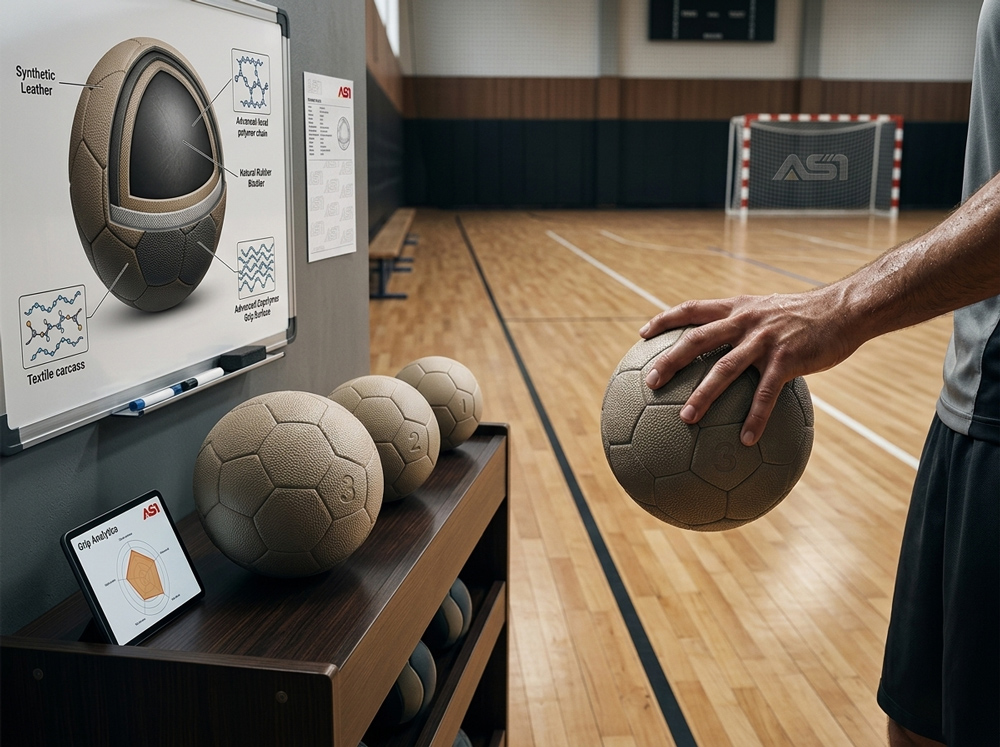
The most defining feature of a handball is its surface texture. Because the game relies on one-handed control, the material must provide an exceptional level of tactile feedback to the athlete.
Synthetic Innovation and Surface Chemistry
Modern professional handballs are constructed from artificial leather designed specifically for high-grip performance. To meet international standards, the engineering of the outer casing involves several key factors:
- Grippy Materials: The use of specialized synthetic leather ensures the ball remains tacky even when in contact with moisture.
- Chemical Enhancements: During the manufacturing process, the material is often treated with special chemicals to enhance its natural stickiness and tactile response.
- Non-Slippery Mandate: According to IHF regulations, the surface must be inherently non-slippery to ensure player safety and maintain the fluidity of the game.
The Resin Factor: Enhancing Kinetic Control
To push the limits of technical control, players in most professional competitions are permitted to use resin (frequently referred to as “wax” or “glue”).
- Bonding Mechanics: This substance creates a near-perfect bond between the player’s skin and the synthetic leather.
- Advanced Maneuverability: The extra friction provided by resin allows for complex “spin shots” and “behind-the-back” passes that would be physically impossible to execute with a standard dry ball.
- Regulatory Acceptance: While used strategically, its application is widely allowed in most high-level competitions to facilitate the sport’s trademark explosive technicality.
3. ASI Soccer: Engineering Precision for the Court
At ASI Soccer, we recognize that international sports—whether handball, futsal, or volleyball—demand equipment that adheres to the highest regulatory blueprints. Our manufacturing focus is rooted in the precision and heritage of global sports hubs, ensuring every stitch and panel meets professional expectations.
Professional Standards for Every Athlete
We believe that professional-grade gear should not be reserved exclusively for elite clubs with massive budgets. That is why ASI Soccer provides international standard sports balls and sportswear at a reasonable price.
- Regulatory Alignment: By prioritizing the same grip-enhancing materials and weight-accurate specifications found in IHF arenas, we ensure our gear is competition-ready.
- Quality Manufacturing: Our production processes mirror the technical requirements of the world’s leading sports federations.
- Performance Without Compromise: ASI Soccer ensures your team is equipped for victory, providing the tactile feedback and durability necessary for high-intensity handball matches.
Expertise in Material Innovation
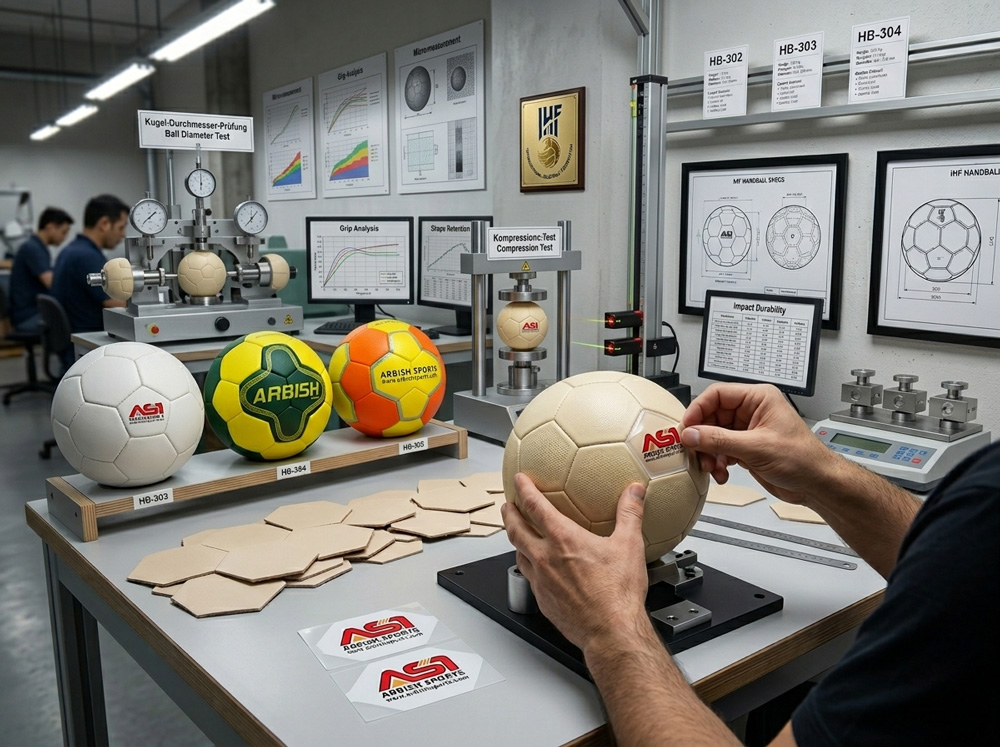
Our commitment to excellence extends beyond the field. With a deep understanding of the material science required for optimal grip and aerodynamics, we bridge the gap between high-end professional requirements and accessible sporting goods. When you choose ASI Soccer, you are choosing equipment that has been tested for sphericity, weight consistency, and surface friction—guaranteeing that your performance is never hindered by your equipment.
4. Summary Table of IHF Specifications
To ensure consistent performance across all levels of play, the International Handball Federation (IHF) dictates specific physical requirements for every official match ball. These parameters ensure the ball remains aerodynamic and manageable for the targeted age and gender categories.
| Ball Size | Targeted Category | Circumference | Weight Range |
| Size 3 | Men and male youth (16+) | 58–60 cm | 425–475 g |
| Size 2 | Women (14+), female youth (14+), and male youth (12–16) | 54–56 cm | 325–375 g |
| Size 1 | Female youth (8–14) and male youth (8–12) | 50–52 cm | 290–330 g |
Technical Considerations for Sizing
- Size 3 Limit: Size 3 is established as the maximum allowable size for any handball competition.
- Ergonomic Scaling: The reduction in circumference for Sizes 2 and 1 is specifically designed to allow players with smaller hand spans to maintain the “one-handed” control essential for technical handball.
- Weight Ratios: The weight is carefully calibrated to ensure that while the ball is lighter for younger players, it still possesses enough mass to allow for accurate long-distance passing and shooting mechanics.
5. FAQ: Expert Guidance on Handball Gear
Understanding the technical requirements of your equipment is essential for maintaining safety and performance on the court. Here are the most common questions regarding IHF-standard handball equipment.
Q: Can I use an outdoor soccer ball for handball?
A: No. A soccer ball is physically too large for the sport’s technical requirements and lacks the specialized, grippy synthetic leather necessary to palm the ball securely with one hand. Attempting to use a soccer ball would significantly hinder your technical development and could lead to finger or hand injuries due to the incorrect size and weight ratios.
Q: Is resin required for all handballs?
A: No. Many modern handballs are engineered with “self-gripping” synthetic surfaces that provide excellent tactile feedback without external aids. While the use of resin is permitted in most high-level professional competitions, many schools and leisure centers mandate “resin-free” balls to maintain the cleanliness of the indoor courts.
Q: How do I clean a handball that has resin on it?
A: To remove resin buildup, you should use a specialized resin remover or a mixture of warm, soapy water applied with a soft cloth. It is critical to avoid harsh industrial chemicals, as these can degrade the specialized “grippy” chemicals integrated into the artificial leather during the manufacturing process.
Q: Why is there a strict weight range for each ball size?
A: The weight ranges—such as 425–475 g for a Size 3 ball—are strictly enforced by the IHF to ensure the ball is heavy enough to remain stable during high-velocity shots while being light enough for players to maintain one-handed control. This balance is essential for the “spin shots” and rapid transitions that define professional handball.
👉 Ready to elevate your game with professional-grade equipment? Contact ASI Soccer on WhatsApp today to discuss our full range of international standard sports gear.