

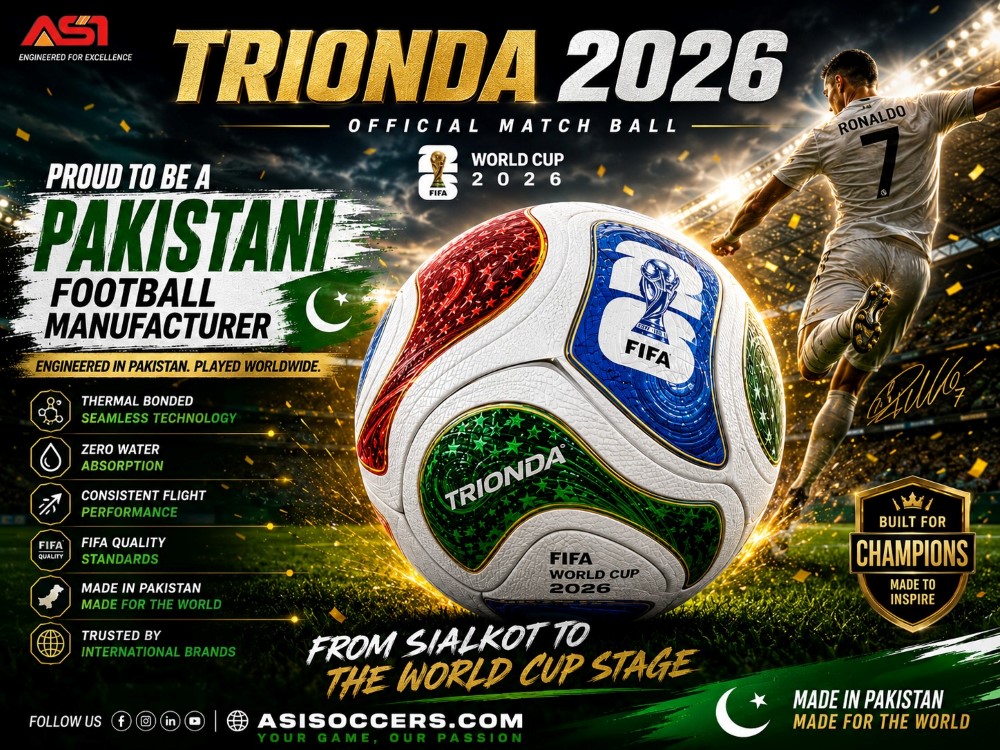
Trionda Official Football 2026: The Technology, Design, and Manufacturing Excellence Behind the World’s Most Advanced Match Ball
Every four years, the world holds its breath. Billions of eyes lock onto a single stage — the FIFA World Cup — where nations collide, legends are born, and the beautiful game reaches its absolute peak. Amid the roar of crowds and the electric atmosphere of packed stadiums, one object sits quietly at the center of it all: the official match ball. It is the most scrutinized, most engineered, and most symbolic piece of sporting equipment on earth.
The Trionda Official Football for the FIFA World Cup 2026 is not just a ball. It is a statement, a triumph of design, aerodynamic science, and advanced materials engineering, built to perform at the highest level the sport has ever demanded. And behind that ball lies a story that stretches from the engineering labs of major football governing bodies all the way to the workshops of Sialkot, Pakistan — the city that has long held the title of football manufacturing capital of the world.
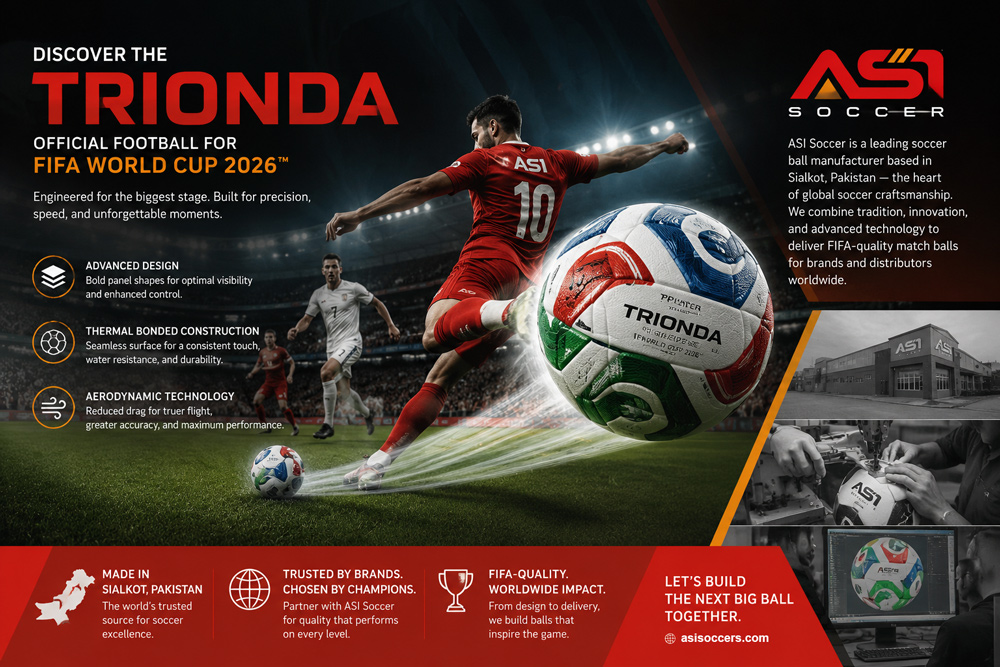
At ASI Soccer, we are proud to be part of this legacy. As a dedicated soccer ball manufacturer from Sialkot, we have spent decades crafting footballs that meet the demands of elite players, professional clubs, and global brands. In this article, we explore Trionda’s design, technology, construction, and the extraordinary manufacturing heritage that makes balls like it possible.
What Is the Trionda Official Football?
The Trionda is the official match ball of the FIFA World Cup 2026, the tournament jointly hosted by the United States, Canada, and Mexico. Designed to meet the most demanding performance specifications in the sport, it represents the culmination of years of research, prototyping, and real-world testing conducted by engineers and football scientists.
Official match balls like the Trionda are not consumer products. They are precision instruments, designed to deliver consistent, predictable, and fair performance across all 104 matches of the tournament — from the group stages to the final. Every property of the ball, from its weight and circumference to its rebound characteristics and water absorption rate, must fall within strict tolerances defined by FIFA’s Quality Pro certification program.
For football brands, distributors, academies, and clubs worldwide, understanding the engineering behind a ball like the Trionda is essential. It sets the benchmark for what a professional match football should look, feel, and perform like — and it raises the standard for every ball that follows it.
Why Is the Trionda Different?
To understand what makes the Trionda stand apart, it helps to look at where the world’s most advanced match balls have come from and where they are going.
Older generations of footballs — even professional ones — were limited by the materials and construction methods available. Round leather panels stitched together created unpredictable seam interactions in flight. Water absorption changed a ball’s weight and behavior throughout a match. Inconsistent bladder pressure affected shape retention. Players had to adapt to the ball rather than the ball adapting to the demands of elite play.
The Trionda breaks from that tradition entirely. Its construction is built around several key innovations:
Aerodynamic Optimization: The Trionda’s panel geometry and surface texture are engineered to reduce drag and improve flight predictability. Shots, crosses, and long passes travel along cleaner, more consistent arcs — giving players the confidence to execute precisely under pressure.
Consistency at Every Altitude and Temperature: Major tournaments span weeks and multiple climate zones. The Trionda’s materials are tested across a range of temperatures and humidities to ensure that a goalkeeper in a cool evening match and a forward in a sun-drenched afternoon game are playing with the same ball.
Advanced Rebound Characteristics: Rebound consistency — the degree to which a ball responds uniformly to impact — is a critical but underappreciated quality. The Trionda’s layered construction ensures that its rebound behavior remains stable across thousands of impacts.
Durability Without Compromise: Elite match balls must maintain their shape and performance properties throughout an entire match and beyond. The Trionda’s thermal-bonded construction eliminates the weak points of traditional stitched panels, delivering structural integrity that holds under the most extreme playing conditions.
The Meaning Behind the Colors
A FIFA World Cup ball is never just functional — it is also a canvas. The Trionda’s visual design is a deliberate celebration of the three host nations: the United States, Canada, and Mexico.
Each color in Trionda’s palette carries meaning:
Red runs through the design as a symbol of passion, energy, and competitive fire — drawing on the national colors of all three host nations and evoking the intensity of World Cup football at its peak.
Blue represents depth, stability, and the vast skies and oceans that define the North American continent — from the Pacific coastlines of California and Mexico to the Atlantic shores of Canada and the American East Coast.
Green brings the natural world into the design — the lush grasslands of the Canadian prairies, the ancient forests of the Pacific Northwest, and the vibrant green of the football pitches themselves.
White and Gold Accents add a sense of prestige and occasion — reminding every player and fan that this ball exists in a singular moment of sporting history.
Together, these colors do more than decorate a football. They tell a story of three nations coming together to host the world’s greatest sporting celebration — a story of diversity, unity, and the universal language of football.
Why Does the Ball Have a Unique Texture?
One of the most immediately noticeable features of the Trionda — and of modern professional match balls in general — is its surface texture. Far from being a purely aesthetic choice, the Trionda’s textured outer skin serves a series of highly specific engineering functions.
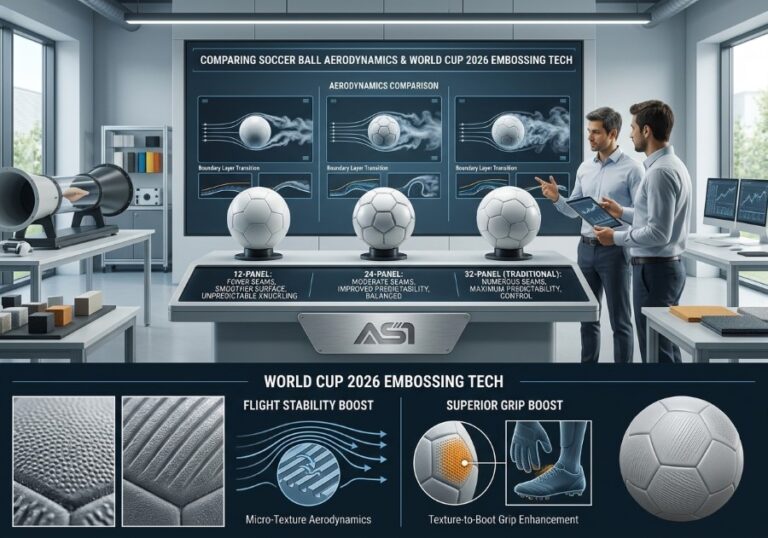
Grip Enhancement: A textured surface creates micro-friction points between the ball and a player’s boot, allowing for more precise control during dribbling, trapping, and striking. Elite players often cite the feel of the ball as critical to their performance — and texture is a key part of that feel.
Improved Ball Control: When a ball’s surface interacts consistently with a boot or a glove, players can predict how the ball will respond. Smooth surfaces can be unpredictable; textured surfaces give players — and especially goalkeepers — a more reliable interface with the ball.
Flight Stability: Texture affects the way air flows over the ball’s surface during flight. Strategically designed surface patterns help to stabilize the ball’s rotation and trajectory, reducing the erratic “knuckling” effect that players and goalkeepers find so difficult to handle. This makes long-range shots and crosses more predictable for everyone on the pitch.
Performance in Wet Conditions: Rain is an ever-present factor in professional football. A textured surface helps channel water away from contact points, maintaining grip and control even in wet weather — a critical advantage in an outdoor tournament spanning multiple climate conditions.
Goalkeeper Handling: For goalkeepers, handling a ball under high-pressure conditions requires certainty. A well-textured surface gives keepers more confidence when catching, punching, and distributing the ball, which can be the difference between a clean save and a costly rebound.
Compared to older smooth-surface footballs, the Trionda’s textured skin represents a genuine performance upgrade — one that is felt by every player who touches it.
Panel Design and Construction
The Trionda departs significantly from the classic 32-panel black-and-white design that defined footballs for decades. Its modern panel architecture is the result of extensive aerodynamic research and computational fluid dynamics modeling.
Modern Panel Engineering: Fewer, larger panels — joined with precision — reduce the number of seams on the ball’s surface. Fewer seams means fewer points of aerodynamic disruption, resulting in cleaner, more predictable flight.
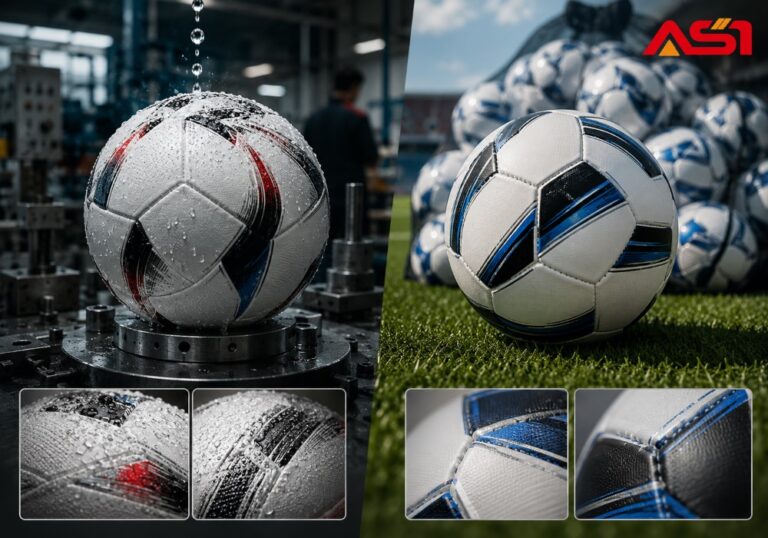
Thermal Bonded Construction: The Trionda uses thermal bonding technology rather than traditional hand-stitching to join its panels. In thermal bonding, panels are fused using heat and pressure, creating a seamless connection that is both stronger and more uniform than stitching. This process eliminates the thread channels and raised seams that can affect flight and water absorption.
Seam Reduction and Surface Uniformity: With thermal bonding, the joins between panels are near-invisible, creating a surface that is as close to perfectly smooth as the textured design allows. This uniformity is critical for aerodynamic consistency.
Water Resistance: Traditional stitched balls absorb water through the thread channels in their seams. Thermal-bonded panels eliminate these channels, dramatically reducing water absorption. A ball that does not absorb water maintains its weight, shape, and performance characteristics throughout an entire match — even in heavy rain.
Shape Retention: The Trionda’s panel geometry and bonding technology work together to ensure the ball maintains its spherical shape under repeated, high-force impacts. Shape retention is a core FIFA Quality Pro requirement and a critical factor in match fairness.
Manufacturing Process of a Professional Match Ball
Creating a professional match football like the Trionda is a sophisticated, multi-stage manufacturing process that requires precision at every step. Here is how a FIFA Quality Pro football is made:
1. Material Sourcing The process begins with the careful selection of raw materials — high-grade polyurethane (PU) for the outer cover, latex or butyl for the bladder, woven textile layers for reinforcement, and specialized adhesives. Only materials that meet strict performance and durability standards are approved.
2. PU Outer Cover Production The outer cover — the layer players touch — is produced from high-grade PU, selected for its durability, softness, and ability to be printed with precision. PU is also more water-resistant than older leather covers, making it the industry standard for professional match balls.
3. Foam Backing Layers Behind the PU outer cover, one or more layers of foam backing are applied. These layers provide cushioning, contribute to the ball’s feel on impact, and help the outer cover maintain its shape after repeated striking.
4. Textile Reinforcement Woven textile layers are bonded to the foam-backed panels, adding structural strength and helping the ball maintain its shape under pressure. These textile layers are critical to the ball’s long-term durability.
5. Panel Printing Before cutting, the flat material sheets are printed with the ball’s design using high-resolution printing processes. Colors, patterns, and branding are applied with precision, ensuring that the finished ball’s visual design is sharp and consistent.
6. Precision Cutting: Individual panels are cut from the printed sheets using precision die-cutting equipment. For a thermally bonded ball, the shape of each panel is engineered to fit perfectly with its neighboring panels, creating the final spherical geometry when assembled.
7. Thermal Bonding Process This is where the ball takes shape. Panels are positioned on a spherical mold and fused using precisely controlled heat and pressure. The thermal bonding process creates a seamless join that is stronger than stitching and maintains the ball’s aerodynamic integrity.
8. Valve Installation A high-quality valve — which allows the ball to be inflated and maintains air pressure over time — is inserted into the assembled shell before the bladder is introduced.
9. Bladder Insertion The ball’s bladder — typically made from latex or butyl rubber — is carefully inserted through the valve opening and positioned at the center of the shell. The bladder is what holds the air that gives the ball its pressure, shape, and bounce characteristics.
10. Inflation and Pressure Testing The ball is inflated to the correct pressure and tested for air retention. A ball that loses pressure too quickly fails this stage. FIFA regulations require that official match balls maintain pressure within a defined range throughout match play.
11. Weight Testing Each ball is weighed to ensure it falls within FIFA’s specified weight range. A ball that is too heavy or too light will perform unpredictably and cannot be certified for match use.
12. Circumference Testing The ball’s circumference is measured at multiple points to confirm sphericity. An out-of-round ball is unacceptable for professional play.
13. Rebound Testing The ball is dropped from a specified height onto a hard surface, and its rebound height is measured. Consistent rebound behavior is a core FIFA Quality Pro requirement.
14. Quality Inspection Each ball undergoes a comprehensive visual and tactile quality inspection. Surface defects, color inconsistencies, and any irregularities in the panel joins are identified, and the ball is either passed or rejected.
15. Final Packaging Balls that pass all testing are deflated to their shipping pressure, packaged in branded boxes, and prepared for export. Every ball that leaves a quality-controlled factory in Sialkot carries with it the assurance of rigorous testing at every stage.
Why Sialkot Is the Football Capital of the World
No discussion of professional football manufacturing is complete without acknowledging the extraordinary role of Sialkot, Pakistan. This city in Punjab Province is responsible for producing an estimated 70–80% of the world’s hand-stitched footballs — a statistic that has held remarkably consistent for decades.
The story of Sialkot’s football industry begins in the late 19th century, when British colonial officers in the region asked local craftsmen to repair damaged sports equipment. The craftsmen of Sialkot — already skilled in leather working and precision manufacturing — rose to the challenge with remarkable speed and quality. Within a generation, Sialkot had become a supplier of sports goods to the British Army and, eventually, to the entire world.
Today, Sialkot’s football manufacturing ecosystem is a marvel of specialized knowledge, multi-generational craftsmanship, and industrial innovation. Hundreds of manufacturers, material suppliers, printing specialists, and quality inspectors operate within a tightly interconnected supply chain. Knowledge is passed from parents to children, from master craftsmen to apprentices, creating a depth of expertise that is simply not replicable elsewhere in the world.
Major global football brands — including some of the most recognized names in the sport — have trusted Sialkot manufacturers to produce their official match balls, training balls, and promotional products for decades. The city’s manufacturers have delivered balls for major international tournaments, Olympic Games, and the football programs of some of the world’s most storied clubs.
For international brands, distributors, and buyers, working with a football manufacturer from Sialkot means accessing this extraordinary heritage, combined with modern production technology and rigorous quality standards.
The ASI Soccer Difference
Within Sialkot’s world-class manufacturing ecosystem, ASI Soccer has built a reputation for combining traditional craftsmanship with modern manufacturing excellence. Here is what sets us apart:
Family-Owned Heritage: ASI Soccer is a family-owned business with deep roots in Sialkot’s football manufacturing tradition. Our commitment to quality is not just a business policy — it is a personal point of pride passed down through generations.
Experienced Craftsmen: Our production team includes some of the most skilled football craftsmen in Sialkot, with decades of experience in both hand-stitched and thermally bonded construction. Their expertise is the foundation of every ball we produce.
Modern Production Technology: We invest continuously in the latest production equipment, quality control systems, and materials testing capabilities. Our factory is equipped to produce thermal-bonded footballs, hand-stitched balls, machine-stitched balls, and training balls to the highest specifications.
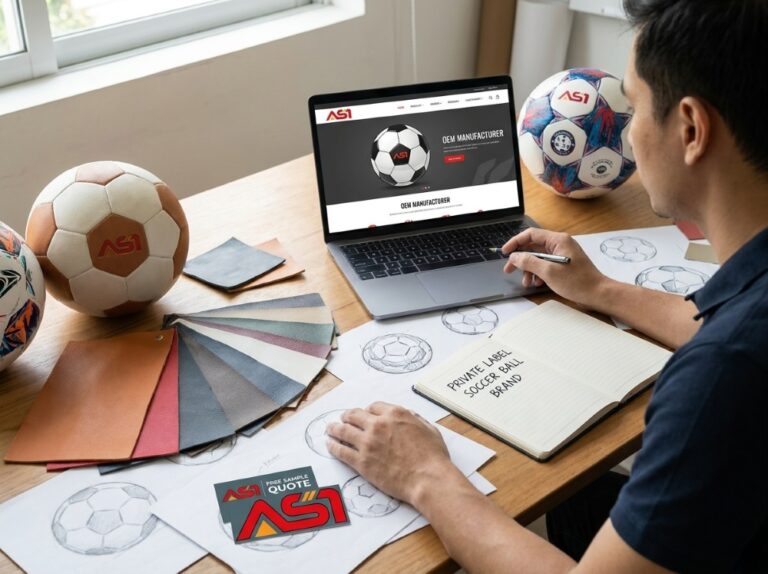
OEM and Private-Label Manufacturing: Whether you are an established football brand looking to expand your product line or a startup launching your first ball, ASI Soccer offers comprehensive OEM and private-label manufacturing services. We manufacture to your specifications and brand identity.
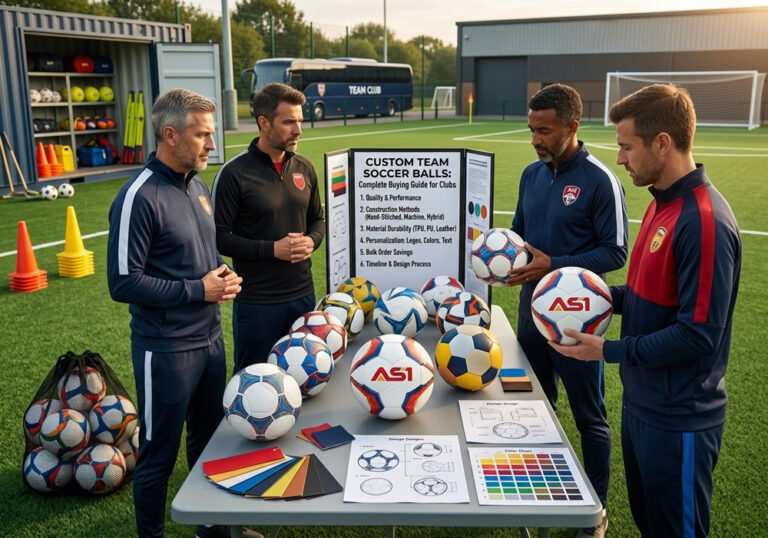
Custom Branding Services: From full-print custom designs to embossed logos and custom color palettes, our design and printing capabilities allow brands to create distinctive, market-ready footballs that stand out from the competition.
Support for Startups and Global Brands: We work with clients at every scale — from emerging brands placing their first orders to established distributors managing global supply chains. Our team understands the unique challenges of both and adapts our services accordingly.
Flexible MOQs: We understand that not every client needs container-load quantities from day one. Our flexible minimum order quantities allow new brands and smaller distributors to enter the market without overcommitting on inventory.
Rigorous Quality Control: Every ball that leaves our factory is tested against defined quality standards. Our quality control process covers weight, circumference, rebound, water absorption, and visual inspection — ensuring that every ball meets the expectations of professional buyers.
Global Export Experience: ASI Soccer ships to clients across Europe, North America, South America, the Middle East, Asia, and beyond. Our logistics expertise ensures that your order arrives on time, in perfect condition, wherever in the world your business operates.
Benefits for Football Brands and Distributors
Choosing to partner with ASI Soccer for your football manufacturing needs delivers a range of strategic advantages:
Cost Efficiency Without Quality Compromise: Sialkot’s manufacturing ecosystem provides highly competitive production costs without sacrificing the material quality, construction precision, or testing standards that professional buyers demand.
Speed to Market: Our established supply chain and experienced production team allow us to move from sample to production quickly — a critical advantage in a market where timing can determine commercial success.
Full-Service Partnership: From initial design consultation and sample production to final quality inspection and export logistics, ASI Soccer manages the full production journey. Our clients can focus on their brands while we handle the manufacturing.
FIFA-Ready Quality: Our production capabilities and quality control systems are aligned with FIFA Quality Pro standards, giving brands the confidence to bring professional-grade products to market.
Scalability: As your brand grows, our production capacity grows with you. ASI Soccer is equipped to scale from sample quantities to full commercial production without compromising quality or lead times.
Transparency and Communication: We believe in clear, open communication throughout every project. Our clients always know the status of their orders, the results of quality testing, and the timeline for delivery.
The Future of Football Manufacturing
The football manufacturing industry is evolving rapidly, driven by advances in materials science, sustainability practices, and digital manufacturing technologies. At ASI Soccer, we are actively tracking and investing in these developments.
Sustainability: Environmental responsibility is becoming a non-negotiable expectation for global brands. The industry is moving toward water-based adhesives, recycled and bio-based materials, and production processes that reduce energy consumption and waste. ASI Soccer is committed to integrating sustainable practices into our manufacturing operations.
Advanced Materials: The next generation of football covers, bladders, and foam layers will be engineered at the molecular level to deliver unprecedented combinations of durability, feel, and performance. We are following the development of these materials closely and working to integrate them into our production capabilities.
Smart Manufacturing: Digital tools — including computer-aided design, precision laser cutting, and automated quality inspection — are transforming production efficiency and consistency. Our investment in modern equipment positions us to adopt these technologies as they mature.
Improved Performance Technologies: The gap between a training ball and a match ball will continue to narrow as manufacturing precision improves. Future official match balls will offer even greater consistency, durability, and performance optimization than the Trionda, and ASI Soccer will be ready to manufacture them.
Customization at Scale: Brand owners and distributors increasingly want footballs that are unique to their identity. Advances in digital printing and modular panel design are making it possible to offer high levels of customization at production volumes that were previously impractical. ASI Soccer is investing in these capabilities to serve the growing demand for distinctive, brand-specific products.
Pride, Craft, and Partnership
The Trionda Official Football for FIFA World Cup 2026 is more than a match ball. It is a symbol of how far the science and craft of football manufacturing have come — and a reminder of how much the world’s most beloved sport depends on the quality of the equipment at its heart.
Behind every great tournament ball is a manufacturing heritage built over generations of dedication, skill, and innovation. That heritage lives most powerfully in Sialkot, Pakistan — a city that has contributed more to the global game than most football fans realize. The footballs played with on the grandest stages in world football bear the craftsmanship of Sialkot’s manufacturers, even when they carry other names.
At ASI Soccer, we carry that heritage with pride. We are not simply a custom soccer ball manufacturer — we are custodians of a tradition that stretches back more than a century, and pioneers of the manufacturing technologies that will define the next century of football.
Whether you are a football brand seeking a manufacturing partner you can trust, a distributor looking for FIFA-quality match balls at competitive prices, an academy or club wanting custom branded training equipment, or a retailer building a product line that stands out in a competitive market, ASI Soccer is your partner.
We invite you to reach out to our team today. Tell us about your vision, your requirements, and your ambitions. We will bring the craftsmanship, the technology, and the passion for excellence that every great football deserves.
Contact ASI Soccer to explore custom football manufacturing, private-label production, FIFA-quality match balls, thermal bonded footballs, and worldwide export services. Let us build something extraordinary together.