

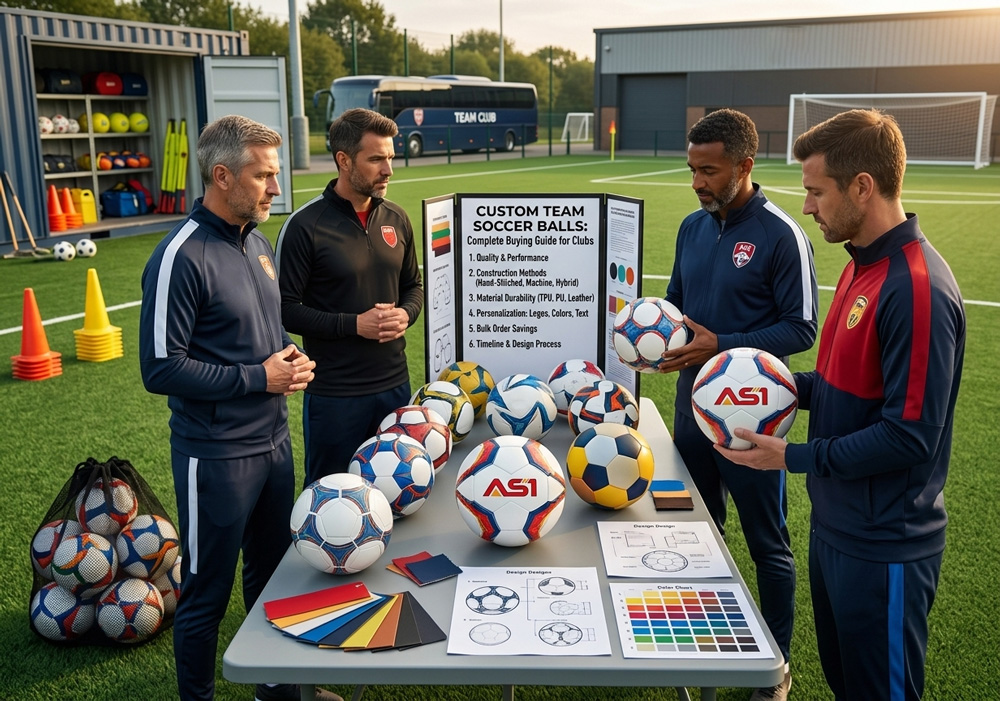
Custom Team Balls: The Ultimate Guide to Designing Custom Match Balls for Clubs & Academies
Custom team soccer balls help clubs and academies build a stronger brand, boost player pride, and create new revenue through merchandise and sponsorships. The right ball depends on three things: your budget, your order size, and how the ball will be used (match play, training, or promotional giveaways). Machine-stitched balls work best for most academies. Hand-stitched balls are the gold standard for pro clubs and top-tier competitions. Thermally bonded balls suit high-performance match play at a premium price. Always order a physical sample before placing a bulk order. This guide breaks down every decision point so you can order with confidence.
Why Custom Team Soccer Balls Matter for Clubs and Academies
A soccer ball is more than gear. It’s a walking billboard for your club.
Every time a player steps on the field with a ball that has your team’s logo and colors, you get free marketing. Parents notice. Rival clubs notice. Sponsors notice too.
Custom balls also help with:
- Brand consistency across youth teams, travel squads, and academy levels
- Sponsorship value when a sponsor’s logo appears on match-day balls
- Fundraising, since branded balls sell well at pro shops and booster events
- Player identity, which matters a lot for younger athletes building team pride
Many academy directors think custom balls are only for big-budget professional clubs. That’s not true anymore. Bulk custom soccer balls are now affordable for youth programs, high schools, and regional academies, thanks to improved OEM soccer ball manufacturing overseas and in domestic partner factories.
Who Actually Buys Custom Balls?
| Buyer Type | Typical Use Case | Order Size |
|---|---|---|
| Youth academy directors | Training sessions, tryout gear, team store items | 50–500 balls |
| Pro/semi-pro club equipment managers | Match balls, warmups, sponsor giveaways | 200–2,000+ balls |
| Sports marketing agencies | Event promos, sponsorship activations | 500–10,000+ balls |
| Athletic departments (schools/colleges) | Team practice, spirit shop merchandise | 100–1,000 balls |
Understanding your buyer category matters because it changes your minimum order quantity (MOQ), your budget per unit, and how much customization makes sense.
Match Balls vs. Training Balls vs. Promotional Balls
Not every custom ball needs to be match-grade. Buying the wrong grade wastes money.
| Ball Type | Purpose | Construction | Price Range (per unit, bulk) | Best For |
|---|---|---|---|---|
| Match Ball | Official games, league play | Thermally bonded or premium hand-stitched | $$$$ | Varsity teams, professional matches |
| Training Ball | Daily practice, drills | Machine-stitched | $$ | Academy training, youth clubs |
| Promotional Ball | Giveaways, fan events, retail | Machine-stitched or molded/panel-printed | $ | Marketing campaigns, fundraisers, mini balls |
A common mistake: ordering match-grade balls for daily training. Match balls wear out fast under heavy practice use, and the extra cost isn’t worth it. Save the premium construction for game day. Use tougher, cheaper training balls for drills and scrimmages.
Key Design Elements of a Custom Team Soccer Ball
Designing a custom ball involves more decisions than most buyers expect. Here’s what actually affects performance, durability, and cost.
1. Size
Soccer balls come in standard sizes based on player age:
- Size 3 – Ages 8 and under
- Size 4 – Ages 9 to 12
- Size 5 – Ages 13 and up, standard adult match size
Academies often order a mix of sizes across age groups. Confirm this early, since it affects your total unit count and your quote.
2. Panel Construction
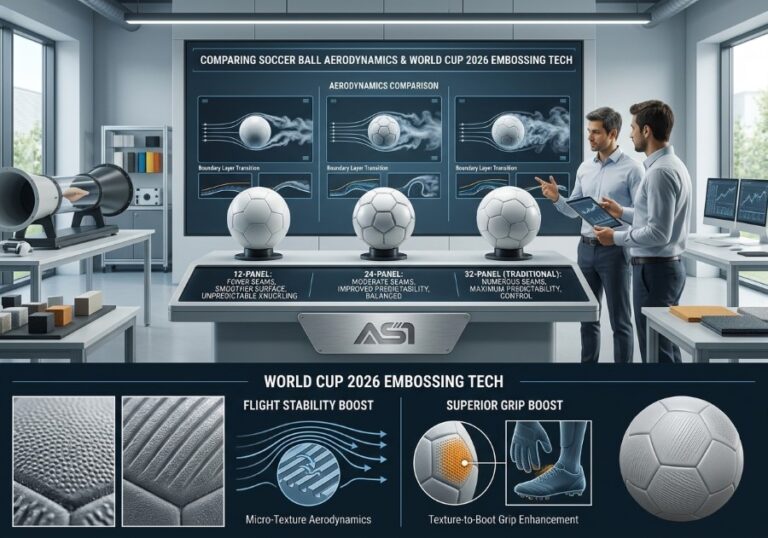
The number and shape of panels affects roundness, flight, and touch.
- 32-panel classic design: Traditional, cost-effective, easy to print logos on
- 26-panel or fewer: Rounder shape, better aerodynamics, used in higher-end match balls
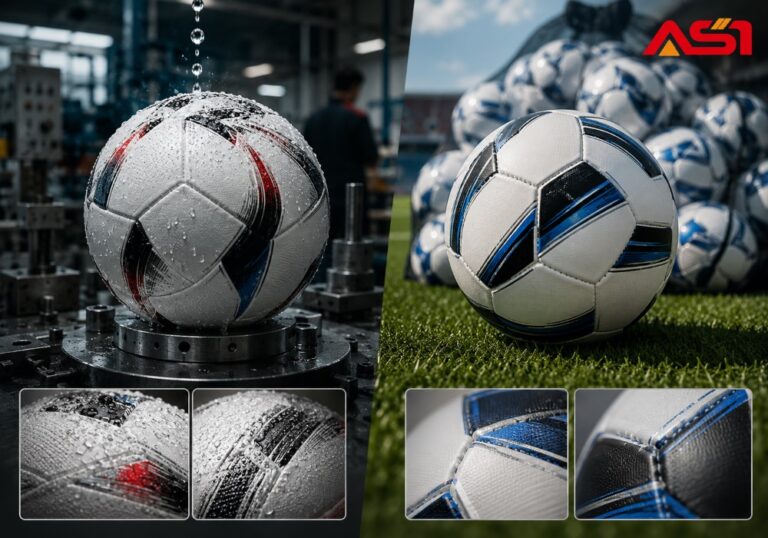
- Molded/thermally bonded panels: Smooth surface, water-resistant, premium feel
For most club orders, 32-panel construction gives the best balance of cost and quality.
3. Material
- PU (Polyurethane) synthetic leather: Most common for match and training balls. Durable, weather-resistant, good touch.
- PVC synthetic leather: Budget-friendly, less durable, used for promotional or entry-level balls.
- Rubber: Extremely tough, low-cost, good for playgrounds and mini-balls, not ideal for competitive play.
4. Bladder Type
The bladder controls air retention and bounce feel.
- Butyl bladder: Best air retention, softer touch, used in match balls
- Latex bladder: Best touch and bounce, but loses air faster, needs daily pumping
- Carbon latex bladder: A hybrid option, balancing touch and air retention
5. Stitching Method
This is one of the highest cost and quality differentiators. It gets its own section below.
Hand-Stitched vs. Machine-Stitched vs. Thermally Bonded: A Full Comparison
This is the single most important decision for club equipment managers. Get this table saved.
| Feature | Hand-Stitched | Machine-Stitched | Thermally Bonded |
|---|---|---|---|
| Durability | Very high | High | Highest |
| Water Resistance | Moderate | Moderate | Excellent |
| Roundness/Flight | Good | Good | Best |
| Touch/Feel | Excellent, traditional | Good | Excellent, modern |
| Cost | Moderate to high | Low to moderate | High |
| Production Time | Longer (handmade) | Faster | Moderate |
| Best Use Case | Club store retail, pro-level training | Youth training, bulk team orders | Official match play, championships |
Quick Takeaways
- If your budget is tight and you’re ordering for a youth academy, machine-stitched balls are the smart pick.
- If you want a premium retail product to sell in your team store, hand-stitched balls carry a traditional, high-quality feel that fans recognize.
- If you’re outfitting a varsity or semi-pro match program, thermally bonded balls give you the performance edge, especially in wet conditions.
Custom Branding Options: What Can You Actually Put on a Ball?
Clubs often assume customization is limited to a logo. In reality, modern OEM soccer ball manufacturing allows a lot more.
Branding Elements You Can Customize
- Team logo and crest
- Club colors (primary and secondary)
- Sponsor logos
- Player names or jersey numbers (for retail or gift balls)
- Founding year or motto
- QR codes linking to team pages or sponsor sites
- Academy tagline or slogan
Common Customization Methods
- Screen printing: Cost-effective, good for simple logos and text
- Panel printing (sublimation): Full-color, edge-to-edge designs, great for detailed crests
- Embossing: Subtle, textured branding, often used on premium balls
- Heat transfer: Durable, vibrant colors, common on mid-range custom orders
Example Design Brief for an Academy Order
A typical brief for a bulk custom soccer ball order looks like this:
- Club crest centered on two panels
- Club colors: navy and gold
- Sponsor logo on one panel (small, corner placement)
- “Est. 2010” text on a bottom panel
- Size 4 for U12s, Size 5 for U15+ and varsity
Sending a clear design brief like this to your manufacturer speeds up the mock-up process and reduces revision rounds.
Custom Team Soccer Balls
A quick-look guide to designing, comparing, and ordering custom match balls for clubs and academies.
Why It Matters
- Free brand exposure on every field
- Adds sponsor revenue potential
- Builds player and fan pride
Match It to the Use
Build Quality
What You Can Brand
- Team crest and club colors
- Sponsor logo placement
- Player names or QR codes
Order Timeline
Design
Sample
Produce
Ship
Before You Order
- Request a physical sample
- Confirm MOQ and price tiers
- Check bladder and stitching type
Ready to Outfit Your Squad?
Get a custom mock-up and factory quote for your club or academy.
Request Your QuoteSourced and produced by ASI Soccers
Bulk Ordering: What Club Buyers Need to Know
Ordering in bulk is where the real cost savings happen, but it also requires more planning.
Minimum Order Quantities (MOQs)
Most custom soccer ball manufacturers set MOQs to make custom tooling and printing worthwhile. Typical MOQs range from 50 to 300 units depending on:
- Ball construction type (hand-stitched MOQs tend to be higher)
- Number of colors in the design
- Whether it’s a first-time custom mold or an existing template
Cost Factors That Affect Your Quote
| Factor | Impact on Price |
|---|---|
| Order quantity | Higher quantity = lower per-unit cost |
| Number of print colors | More colors = higher setup cost |
| Panel construction | Fewer panels/premium builds = higher cost |
| Stitching method | Hand-stitched costs more than machine-stitched |
| Shipping method | Air freight is faster but pricier than sea freight |
| Packaging | Individual boxes cost more than bulk poly bags |
Lead Times to Plan Around
Custom orders take time. A general timeline looks like this:
- Design and mock-up approval: 3 to 7 days
- Sample production: 4 to 10 days
- Bulk production: 1 to 4 weeks after sample approval
- Shipping: 1 to 2 weeks (air) or 4 to 8 weeks (sea)
Academy directors ordering for a fall season should start the process by early spring to avoid rush fees or missed deadlines.
Budgeting Tip
Always ask for a tiered quote. A good supplier, like ASI Soccers, will show pricing at multiple quantity breakpoints (for example, 100, 250, 500, and 1,000 units) so you can see exactly where the savings kick off.
Club Equipment Sourcing Checklist
Before you commit to a manufacturer, run through this checklist. It saves headaches later.
- Request a physical sample, not just a digital mock-up
- Confirm bladder type matches your climate and use case
- Ask about minimum order quantity and price breaks
- Confirm turnaround time in writing
- Ask if the factory does OEM soccer ball manufacturing in-house or outsources
- Check for quality certifications (FIFA Quality Pro, FIFA Quality, or IMS if match balls are needed)
- Get a clear return or defect policy
- Confirm shipping cost and delivery window
- Ask about reorder ease for future seasons
Why the Sample Step Matters Most
Skipping the physical sample is the number one mistake club buyers make. A screen mock-up never shows you the actual stitching quality, panel alignment, or ball weight. Always request and test a sample ball before approving a bulk run, even if it adds a week to your timeline.
Common Mistakes Clubs Make When Ordering Custom Balls
- Ordering match-grade balls for training. Wastes budget on unnecessary durability features.
- Skipping the sample stage. Leads to costly reprints or unhappy players.
- Underestimating lead time. Rush orders often cost 20 to 40 percent more.
- Using low-resolution logo files. Blurry crests look unprofessional on the final product.
- Not asking about bladder type. A latex bladder in a program with no daily maintenance schedule leads to flat balls every practice.
- Ignoring reorder consistency. Switching suppliers each season can cause color and logo mismatches across your inventory.
How Custom Team Balls Support Club Revenue
Beyond the field, custom balls create a business opportunity.
- Team store sales: Branded mini-balls and full-size retail balls sell well to parents and fans
- Sponsor packages: Offering sponsor logo placement on match balls can be a paid add-on in your sponsorship tiers
- Fundraising events: Signed or limited-edition custom balls perform well at auctions and banquets
- Camp and clinic giveaways: Promotional balls with club branding build interest among prospective players
A smart equipment manager treats the ball order not just as gear, but as a small marketing and revenue line item within the club’s annual budget.
Frequently Asked Questions
How many custom soccer balls do I need to order to get a good price?
Most suppliers start offering meaningful discounts around 100 to 250 units. Larger academies ordering 500-plus units usually see the best per-unit pricing.
What’s the difference between a custom logo ball and a fully custom ball?
A custom logo ball uses an existing ball template with your logo added. A fully custom ball lets you choose panel count, material, bladder type, and full-color design from scratch. Fully custom balls take longer and typically require a higher minimum order.
Can I order different sizes in the same bulk order?
Yes. Most manufacturers allow mixed-size orders as long as the total quantity meets the MOQ. Just confirm the size breakdown clearly in your purchase order.
Do custom soccer balls meet official match regulations?
They can, as long as the manufacturer follows FIFA-approved size, weight, and circumference standards. Ask specifically for FIFA Quality or FIFA Quality Pro certification if the balls will be used in sanctioned league matches.
How long does a custom order usually take from design to delivery?
Plan for 6 to 10 weeks total, covering design approval, sample production, bulk manufacturing, and shipping. Add extra time for peak seasons like back-to-school or league kickoff periods.
Is it cheaper to buy plain balls and add logos separately?
Usually not. Adding logos after the fact through a third party often costs more per unit than ordering pre-branded balls directly from an OEM soccer ball manufacturing partner, and the finish quality tends to be lower.
Final Buying Advice for Academy and Club Buyers
Choosing the right custom team soccer ball comes down to matching the ball’s construction to its actual use. Training balls don’t need match-grade materials. Match balls shouldn’t be cut with cheap PVC. Promotional balls should focus on branding clarity over premium construction.
Start with a clear design brief, request a sample, confirm your MOQ and lead time, and lock in pricing at the right quantity tier. Clubs that follow this process avoid budget overruns and end up with gear that actually represents their brand well, season after season.
ASI Soccers works directly with clubs, academies, and sports marketing agencies to source custom-branded match balls, bulk training balls, and promotional footballs built to spec. Whether you need 100 training balls for a youth program or 5,000 promotional balls for a league-wide sponsorship activation, ASI Soccers can walk you through material choices, stitching options, and pricing tiers before you commit to a full production run.
Ready to outfit your squad with match-ready custom soccer balls? Request your custom mock-up and factory quote today.