

Your Pressure Gauge Is Lying to You: The Hidden Variables Behind Inaccurate Football Hardness Readings
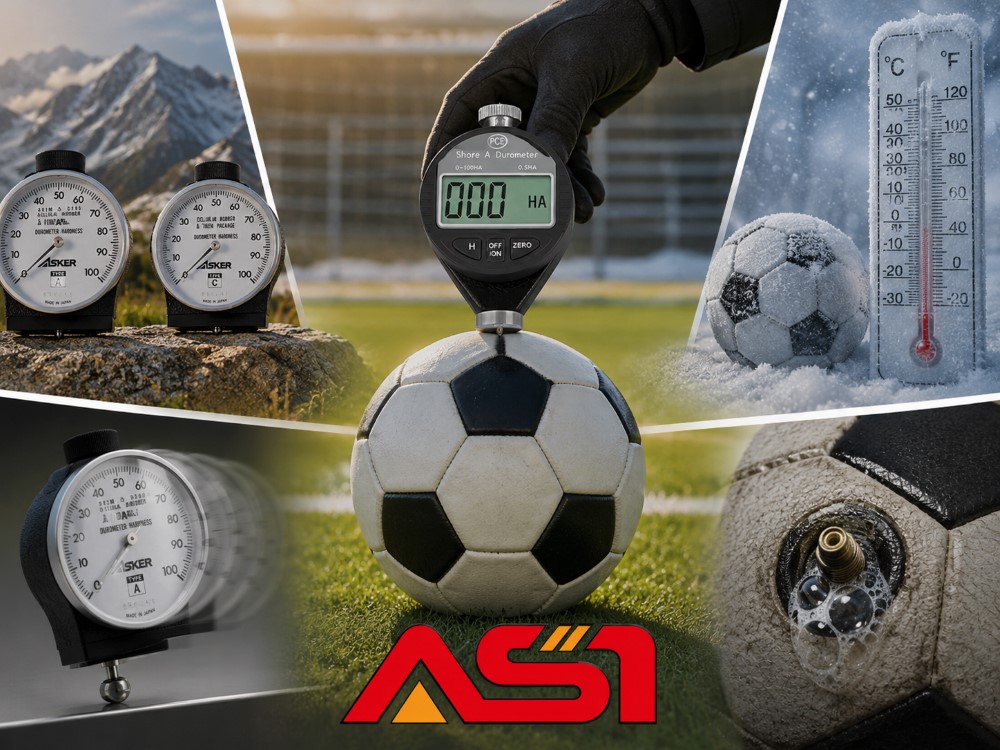
Most football pressure errors are not human errors. They are instrument errors. Your gauge — whether analog or digital — is subject to temperature drift, altitude bias, needle lag, calibration decay, and valve seal leakage that can produce readings 0.5 to 2+ PSI away from reality. When official regulations demand tolerances as tight as ±0.1 PSI (FIFA Law 2), an unreliable instrument is not a minor inconvenience — it is a compliance failure. Fix the instrument first. Everything else is secondary.
The Tool You Trust Shouldn’t Be the One You Ignore
Before every professional match, match officials check the football pressure. It looks methodical. It feels scientific. A gauge goes onto the valve, a number appears, and the ball is approved or rejected. The process seems airtight.
But here’s what nobody tells you: the gauge itself is often the least reliable part of the entire process.
Referees, coaches, equipment managers, and manufacturers all focus on inflation technique, ball quality, and environmental conditions — and rightly so. But the instrument in your hand has its own agenda. It responds to temperature. It drifts with altitude. It lags behind real pressure. Its seal degrades. And when it was last calibrated… well, when was it last calibrated?
This article breaks down every major instrument-side variable that corrupts football hardness readings, explains the physics behind each one, and tells you exactly what accurate, regulation-compliant testing actually requires.
What the Laws of the Game Actually Require
Before diagnosing instrument errors, you need to know what you’re measuring against.
FIFA Law 2 — The Ball sets the official pressure standard for footballs used in all FIFA-sanctioned competitions:
Pressure: 0.6 – 1.1 atmosphere (600 – 1,100 g/cm²) at sea level, equivalent to 8.5 – 15.6 PSI (lbf/in²)
| Governing Body | Pressure Standard | Unit |
|---|---|---|
| FIFA (Professional) | 0.6 – 1.1 atm | 8.5 – 15.6 PSI |
| FIFA (Match Ball) | 0.8 – 1.0 atm | ~11.5 – 14.5 PSI |
| UEFA Champions League | 0.8 – 1.0 atm | ~11.5 – 14.5 PSI |
| Premier League | 0.8 – 1.0 atm | ~11.5 – 14.5 PSI |
| NFL (American Football) | 12.5 – 13.5 PSI | PSI |
| NCAA (American Football) | 12.5 – 13.5 PSI | PSI |
The permissible window at the elite level is roughly 3 PSI wide. A gauge with even 1.5 PSI of systematic error effectively halves your compliance window — and you would never know it without independent calibration data.
Variable 1: Analog vs. Digital Gauges — They Are Not Interchangeable
Many teams own both types and use them interchangeably. This is a significant methodological error.
How Analog Gauges Work
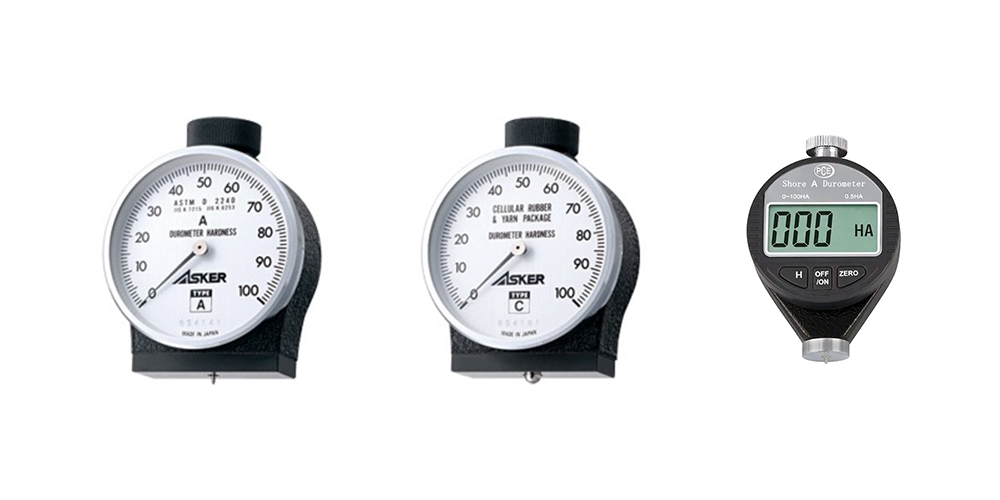
Analog gauges utilize a Bourdon tube — a curved, hollow metal tube that straightens under internal pressure, causing a mechanical needle to move through a gear linkage. The measurement is entirely mechanical.
The problem: Metal expands and contracts with temperature. At 0°C (32°F), the Bourdon tube is stiffer and responds less freely to pressure, causing under-reading by 0.3–0.8 PSI. At 35°C (95°F), it becomes more elastic and can over-read by a similar margin.
How Digital Gauges Work
Digital gauges use a piezoelectric or strain-gauge sensor that converts physical deformation into an electrical signal. They are more stable across temperature ranges — but not immune.
The problem: The sensor’s reference voltage drifts with temperature. Budget digital gauges with cheap voltage regulators show a drift of ±0.5 PSI across a 30°C temperature range. Premium units with temperature-compensated sensors keep drift under ±0.1 PSI.
Altitude Compounds Everything
At 2,500 meters above sea level (e.g., Estadio Hernando Siles in La Paz, Bolivia — home of Bolivia’s national team and one of the highest professional football stadiums in the world at 3,637m), ambient air pressure is significantly lower than at sea level. Both gauge types measure gauge pressure (pressure relative to ambient), not absolute pressure.
This means a ball inflated to 12 PSI gauge pressure at La Paz contains significantly less air density than a ball inflated to the same gauge reading in London. The ball feels and performs differently, yet both pass the gauge inspection.
Key Insight: FIFA acknowledges altitude as an adjustment factor, but no current official protocol mandates altitude-corrected gauge readings. This is an unresolved gap in the regulatory framework.
| Gauge Type | Temp Sensitivity | Altitude Sensitivity | Cold Weather Accuracy | Best Use Case |
|---|---|---|---|---|
| Analog (budget) | High | Moderate | Poor | Training, informal |
| Analog (precision) | Moderate | Moderate | Fair | Semi-professional |
| Digital (budget) | Moderate | Moderate | Fair | Training |
| Digital (temp-compensated) | Low | Low | Good | Match-day, professional |
Variable 2: The Gauge Warm-Up Effect — The First Reading Is Almost Always Wrong
This is the single most overlooked source of gauge error in practice — and it affects every gauge type.
What Happens During Storage
A pressure gauge stored in a locker, kit bag, or equipment room overnight equilibrates to ambient temperature. Let’s say the storage room is 12°C (54°F) and the pitch is 22°C (72°F). When you take the gauge out and immediately press it against a ball:
- The gauge body is cold. The sensor or Bourdon tube is contracted.
- The warm ball transfers heat through the metal valve needle into the gauge body.
- The internal components begin expanding while you are taking your reading.
- The reading shifts as you watch it, or just after you log it.
In practice, this thermal stabilization takes 60–90 seconds for analog gauges and 30–60 seconds for digital. During that window, your reading is unreliable.
The Protocol Fix
- Let the gauge sit in the playing environment for at least 5 minutes before first use.
- Discard the first reading from any gauge used for the first time in a session.
- In cold weather (below 10°C / 50°F), extend the warm-up period to 10 minutes.
Real-World Example: Referees officiating early-morning youth matches in winter routinely take the gauge from a warm car into cold air and test immediately. The warm-up effect almost guarantees a reading 0.4–0.7 PSI above actual ball pressure. The balls pass. They are, in reality, under-inflated.
Variable 3: Needle Lag — Why Analog Gauges Almost Always Over-Report
Needle lag is a mechanical limitation built into the physics of every analog gauge. Understanding it explains why analog gauges have a systematic bias toward higher readings.
The Mechanics of Lag
When you press a gauge onto a valve, air enters the gauge chamber rapidly — faster than the mechanical gear system can respond. The needle overshoots, momentarily indicating a pressure slightly above true pressure.
As the system reaches equilibrium, the needle falls back. But here’s the problem: most people read the gauge at peak needle displacement, not at equilibrium.
- Peak displacement: ~0.3–0.9 PSI above true pressure (varies by gauge quality)
- Equilibrium reading: ±0.1–0.2 PSI of true pressure (for quality gauges)
- Time to equilibrium: 2–4 seconds after valve engagement
This is not a defect. It is a characteristic of all analog mechanical gauges. Knowing this and waiting for equilibrium before reading is the correct technique — but it is rarely taught.
Consequence of Inflation
If a technician reads peak rather than equilibrium:
- They believe the ball is at 13.0 PSI.
- Actual pressure: 12.3 PSI.
- The ball is released as compliant.
- It is, by regulation, potentially non-compliant.
Multiply this across 12–22 match balls (standard provision for professional matches), and you can have an entire set of game balls systematically under-inflated by nearly 1 PSI — undetected.
Variable 4: Calibration Schedules Matter More Than Brand or Price
Many equipment managers invest in premium-brand gauges and never calibrate them. This is exactly backwards from what the data supports.
How Gauges Fall Out of Calibration
- Analog gauges: The Bourdon tube experiences metal fatigue with every pressure cycle. After approximately 500–1,000 pressurizations, the tube’s elasticity changes slightly, shifting the baseline reading.
- Digital gauges: Sensor drift is gradual but cumulative. Electrical components age, reference voltages shift, and battery depletion in low-battery states affect sensor output before the gauge shows a low-battery warning.
What Calibration Actually Involves
A traceable calibration test compares your gauge against a deadweight tester or a reference master gauge calibrated to national or international standards (e.g., NIST in the USA, NPL in the UK, PTB in Germany).
| Calibration Interval | Use Frequency | Environment |
|---|---|---|
| Every 3 months | Daily professional use | Variable temperatures |
| Every 6 months | Weekly semi-professional use | Controlled environment |
| Every 12 months | Occasional recreational use | Stable indoor storage |
| Immediately | After any drop or impact | Any |
| Immediately | After extreme temperature exposure | Any |
The Price Paradox: A $15 gauge calibrated monthly outperforms a $200 gauge that has never been tested against a reference standard. Calibration frequency is the performance variable — not purchase price.
A reputable gauge from a standards-compliant manufacturer is a better starting point, but calibration is non-negotiable regardless of brand. At ASI Soccer, every pressure testing tool shipped with professional-grade footballs comes with documented calibration specifications — because ball quality and measurement quality must be held to the same standard.
Variable 5: The Valve Adapter Seal — The Pressure Loss Nobody Accounts For
The most overlooked mechanical variable in the entire testing process is the small rubber or silicone O-ring inside the gauge’s valve adapter — the component that connects the gauge needle to the ball’s inflation valve.
Where the Pressure Goes
When you insert the gauge needle into the ball valve, a momentary air path opens between the ball’s interior and the gauge chamber. If the adapter seal is degraded, cracked, or incorrectly sized for the valve type:
- Air escapes through the imperfect seal as pressure equalizes.
- The gauge reads a lower pressure than the ball actually contains.
- The tester inflates the ball further to reach the target reading.
- The gauge is removed. The ball is now over-inflated.
This scenario is extremely common with multi-purpose adapters — gauges sold with adapters intended to fit both football (soccer) valves and American football/basketball/volleyball valves. The fit tolerances differ between valve types, and a loose fit means a leaky seal.
Valve Type Compatibility
| Sport | Valve Type | Needle Gauge (mm) | Seal Fit Sensitivity |
|---|---|---|---|
| Football (Soccer) | Sports/Bladder valve | ~2.0mm | High |
| American Football | Similar to soccer | ~2.0mm | High |
| Basketball | Larger bore | ~2.5mm | Moderate |
| Volleyball | Narrow bore | ~1.7mm | Very High |
Field Test for Seal Integrity: After inserting the gauge, listen for hissing and watch whether the gauge needle drops slowly from its initial reading. Any downward creep during a 5-second static hold indicates seal leakage. Replace the adapter.
The Compounding Effect: When All Variables Activate Together
Individual errors are manageable. Combined errors are match-compromising.
Consider this realistic scenario for a January morning Premier League warm-up:
| Variable | Individual Error | Direction |
|---|---|---|
| Gauge stored in cold equipment room overnight | –0.5 PSI | Under-read |
| First reading taken without warm-up period | +0.6 PSI | Over-read |
| Peak needle displacement read (not equilibrium) | +0.5 PSI | Over-read |
| Adapter seal worn (minor leakage) | –0.3 PSI | Under-read |
| Gauge last calibrated 14 months ago (drift) | +0.4 PSI | Over-read |
| Net Combined Error | +0.7 PSI | First reading taken without a warm-up period |
The technician believes the ball is at 13.5 PSI. The ball is actually at 12.8 PSI — near the lower boundary of the legal window. Under match conditions, with the temperature dropping further on the pitch, it could fall below 12.5 PSI during play.
This is not a hypothetical. This is Tuesday morning at thousands of clubs around the world.
Compliance Checklist: Pre-Match Gauge Protocol
Use this checklist before every official match ball inspection:
- Gauge has been in the playing environment for at least 5–10 minutes (warm-up)
- The gauge calibration date is within the recommended interval for use frequency
- Valve adapter O-ring is inspected and undamaged
- The adapter is the correct type and size for the ball valve
- Gauge is zeroed (digital) or resting at zero with no pressure applied (analog)
- First reading is discarded or treated as provisional
- Needle is read at equilibrium (2–4 seconds after engagement), not at peak
- Temperature and altitude conditions are noted alongside pressure readings
- Results are logged with gauge ID, date, and tester name
FAQ: Football Pressure Gauge Accuracy
Q: How often should I replace a pressure gauge?
Replace analog gauges every 2–3 years under regular professional use, sooner if dropped or exposed to extreme conditions. Digital gauges may last longer electronically, but should be tested against a reference standard annually, regardless.
Q: Is it better to test before or after warm-up?
Always after the gauge has thermally stabilized in the environment where testing takes place. Testing a cold gauge in a warm environment (or vice versa) introduces thermal error before you even engage the valve.
Q: Can I use the same gauge for footballs and basketballs?
Technically, yes, if the adapter fits correctly and seals properly. In practice, multi-sport adapters frequently create seal integrity problems. Dedicated single-sport adapters are always preferred for precision testing.
Q: Does ball brand or construction type affect gauge accuracy?
The gauge reads air pressure — not the ball. However, bladder type (latex vs. butyl) affects how quickly the ball’s internal pressure equalizes after inflation, which affects when you should test, not how the gauge reads.
Q: What is the difference between gauge pressure and absolute pressure?
Gauge pressure (what your gauge reads) is pressure relative to ambient atmospheric pressure. Absolute pressure includes atmospheric pressure. At altitude, ambient pressure is lower, so the same gauge pressure represents less total air density. FIFA standards are quoted as gauge pressure, which is why altitude adjustment is a legitimate but currently unregulated variable.
Q: Are digital gauges always more accurate than analog?
Not inherently. A temperature-compensated digital gauge outperforms most analog gauges. A budget digital gauge with no temperature compensation may perform no better — and sometimes worse — than a quality precision analog gauge. Calibration history matters more than gauge type.
Q: How do I find a sports ball that holds pressure consistently for accurate testing?
Ball quality directly affects your ability to get consistent readings. A bladder that micro-leaks makes every reading provisional. ASI Soccer manufactures footballs with butyl bladders built to FIFA Quality Pro tolerances, which means the ball holds pressure within spec so your gauge readings reflect true inflation state — not a constantly shifting target.
Final Word: Measure the Measurement
The industry obsesses over ball quality, pitch conditions, and player performance. Almost nobody audits the instrument doing the measuring.
Every source of gauge error described in this article is correctable with knowledge, process discipline, and appropriate equipment:
- Analog vs. digital → Choose the right tool for your environment; use temperature-compensated digital for professional applications.
- Gauge warm-up → Always allow thermal stabilization before the first reading.
- Needle lag → Read at equilibrium, not at peak displacement.
- Calibration → Schedule it by use frequency, not by year or by gut feeling.
- Valve adapter seal → Inspect before every session; use sport-specific adapters.
When you hold a gauge to a ball, you are making a compliance decision. That decision is only as good as the instrument in your hand. Treat your gauge like the precision instrument it is — or accept that the number on its face is a suggestion, not a fact.
For clubs and manufacturers who want both their balls and their measurement tools to meet international standards, the combination of quality materials and rigorous testing process is what separates a professional operation from a lucky one. ASI Soccer was founded on exactly that premise: that international-standard performance should not require international-level budgets.
Start with an honest gauge. End with a compliant ball. Everything in between follows from those two commitments.