
Introduction to Sialkot’s Global Recognition
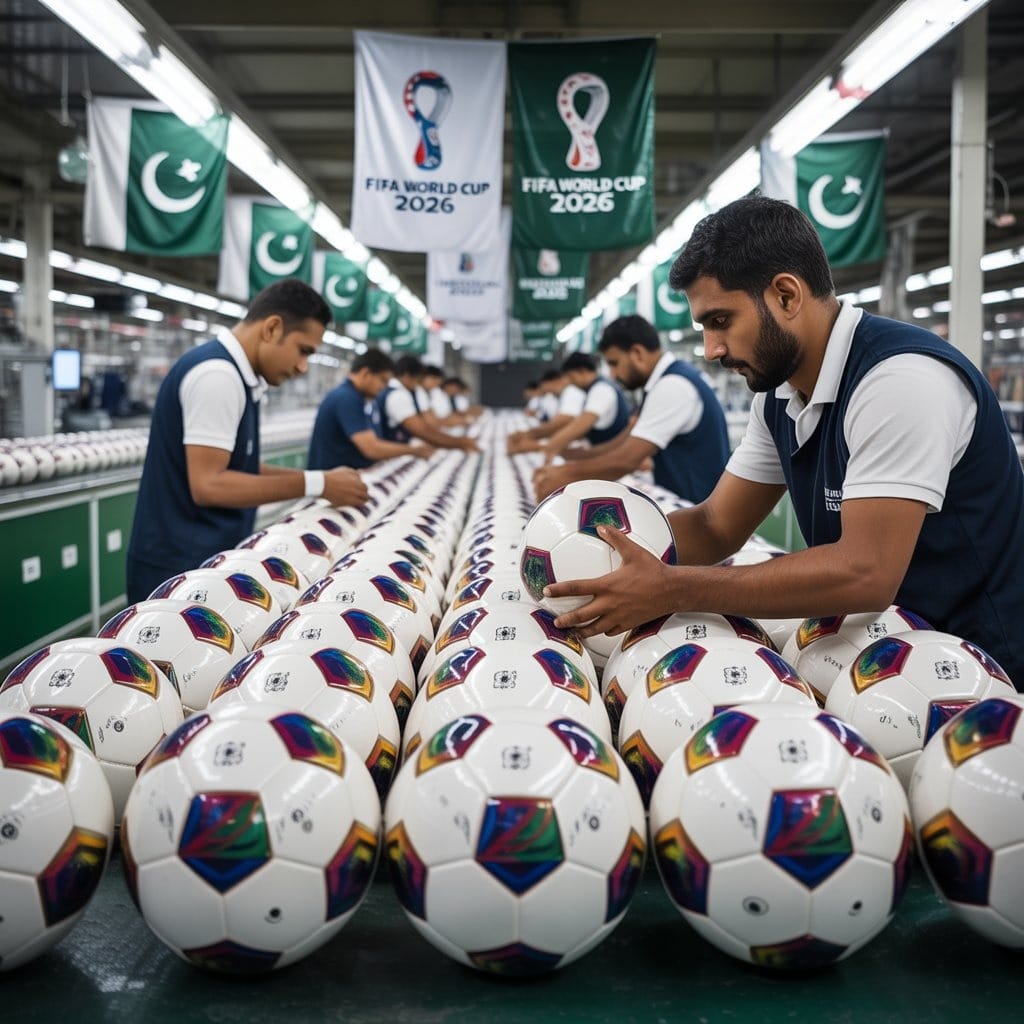
When the world talks about football, very few people know that the heart of the game also beats in sialkot pakistan.With the confirmation that the official FIFA World Cup 2026 balls are being manufactured in Pakistan, Sialkot has once again demonstrated its expertise in football manufacturing to the world. This achievement has given Pakistan an even stronger place on the global sports map. This is why Official FIFA World Cup 2026 balls are made in Pakistan.
Why Sialkot Matters in the Global Sports Industry
Sialkot is not just any ordinary industrial city; it is a sports goods manufacturing powerhouse. For the past several decades, Sialkot has been producing hand-stitched footballs, hybrid soccer balls, thermal-bonded balls, machine-stitched balls, and athletic equipment used by professional players around the world. From local grounds to glamorous World Cup stadiums, Sialkot footballs have been featured everywhere.
Pakistan’s Role in International Football Manufacturing
Pakistan produces approximately 70% of the world’s hand-stitched footballs. This number explains why FIFA trusts Pakistan for its biggest events.
The Legacy of Sialkot as a Sports Goods Hub
Historical Evolution of Sports Manufacturing in Sialkot
This story began more than 100 years ago when British soldiers began ordering sports equipment locally. What began as local workshops eventually grew into a global supply chain that now serves companies such as FIFA, adidas, Nike, and Puma.
From local workshop to global brand,
Today, thousands of SME in the Sialkot Export to more than short countries showcase Pakistani craftsmanship on the world stage
FIFA World Cup 2003 and Pakistan,
What makes the FIFA World Cup 2026 special?
The FIFA World Cup in the USA, Canada, and Mexico will be the largest tournament ever. 48 teams will participate. With billions of people watching, the pressure on quality is naturally very high.
Host Countries and Global Expectations
Every kick, every pass, and every goal will come from a football that proudly bears the Made in Pakistan label.
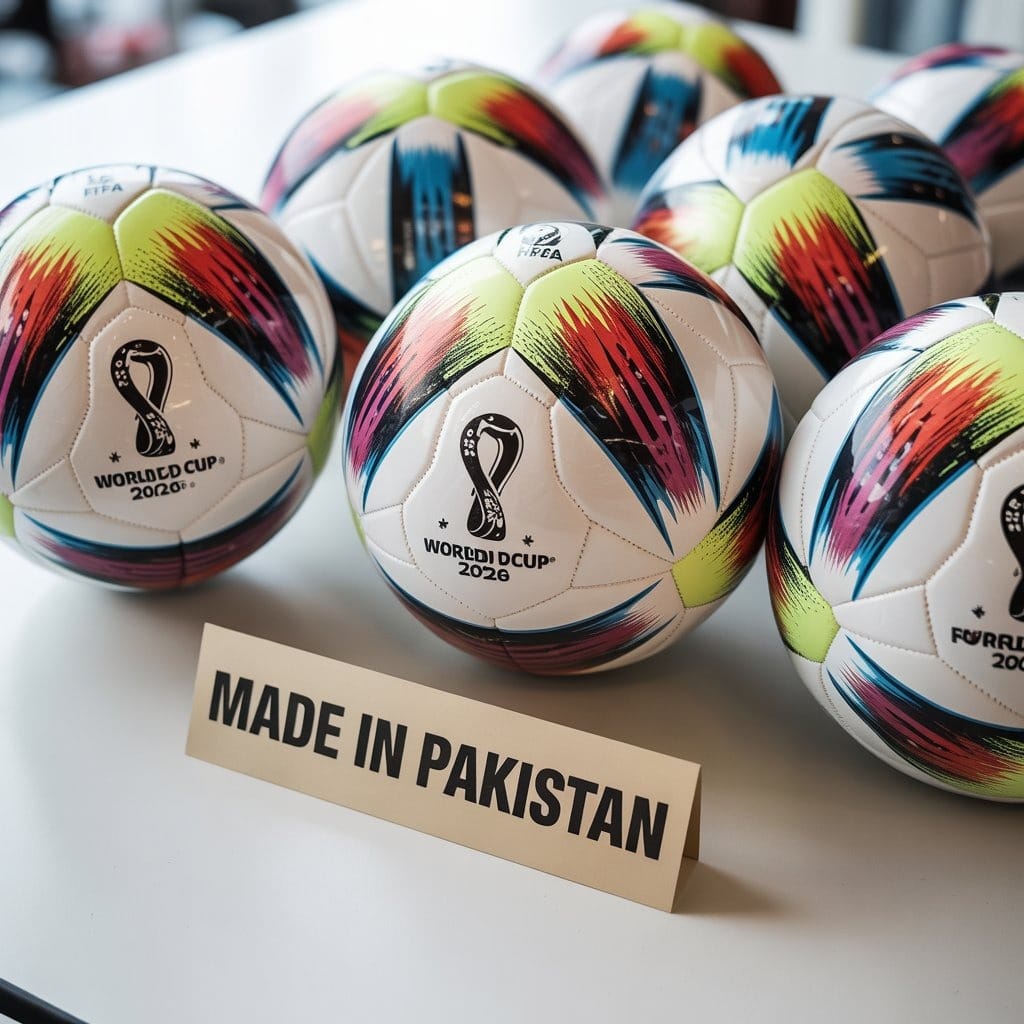
Official FIFA World Cup 2026 Balls are Made in Pakistan
Selection of Sialkot for Official Match Balls
FIFA’s decision was not entirely accidental. Sialkot’s football factories cleared strict durability performance and safety tests; only then were they given this responsibility.
Qualities standard step by FIFA
each ball undergoes
- shape reatation test
- water, observe patient checks
- flight accuracy evolution
Only the best survive
craftsmanship behind football manufacturing in Sialkot
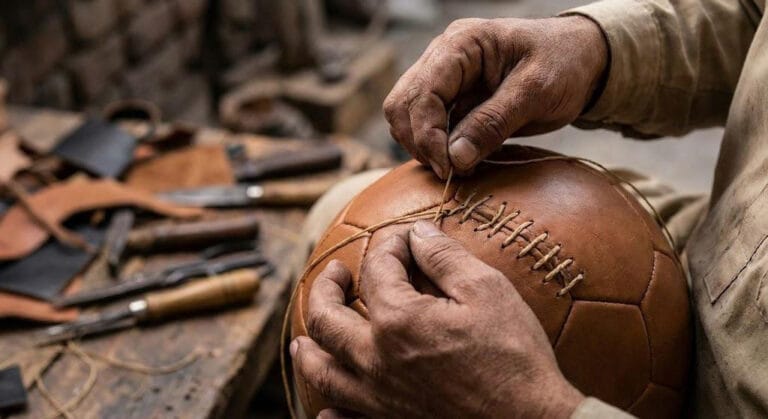
Hand switch football excellence
Unlike machine-made balls, hand-made balls from Pakistan offer superior control and durability.
Skilled workforce and generation expertise
Many workers learn the craft from their parents. This is Heritage in motion, switch panel by panel.
Technology and innovation in Pakistan football production
Modern machinery and testing lab
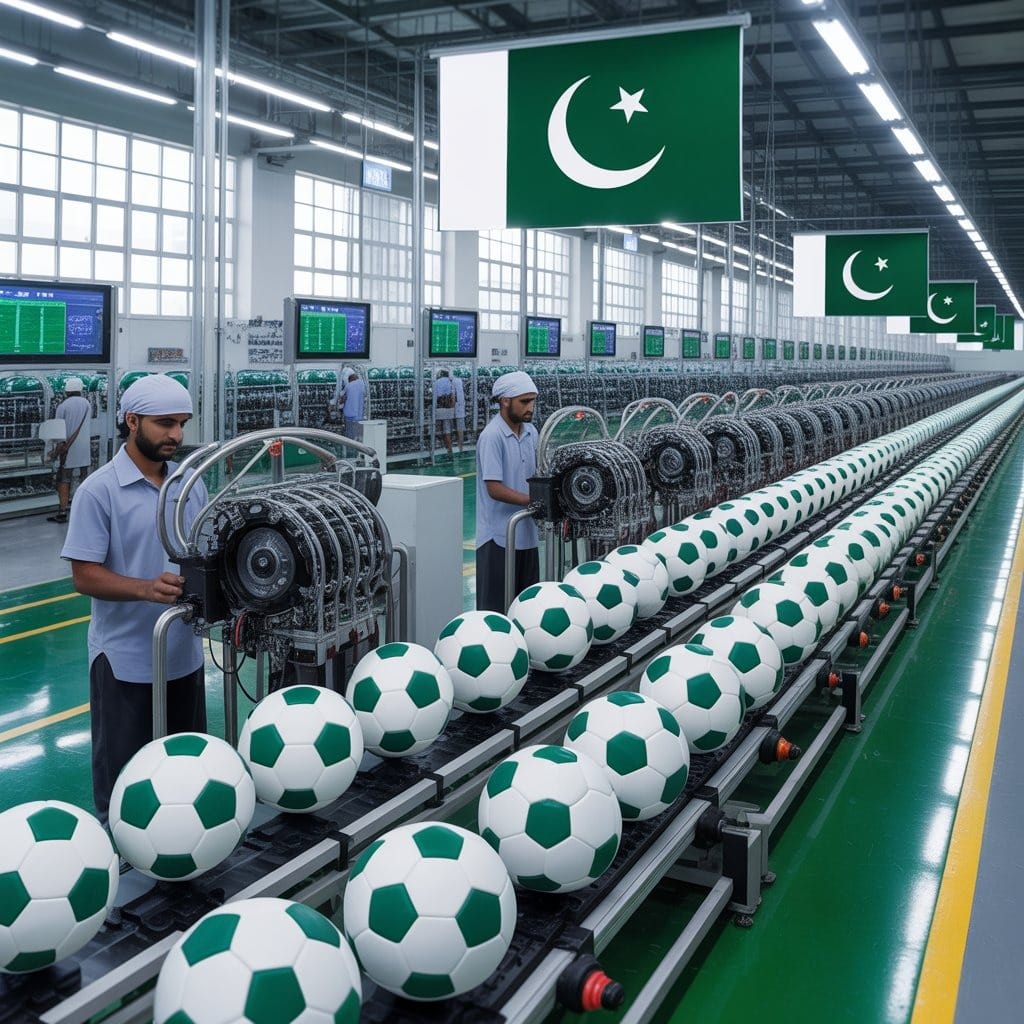
Sialkot factories now blend traditional with Tech, using thermal bonding, laser cutting, and AI-based quality control.
sustainability and eco-friendly materials
Eco-friendly latex recycled material and reducing water usage make Pakistan a leader in sustainable sports.
Economic impact on Pakistan
boost to exports and foreign exchange
The official FIFA World Cup 2026 balls are made in Pakistan, which alone contributes millions of dollars in sports export, strengthening Pakistan economy.
Employment growth in Pakistan
Over 60000 workers benefit directly, creating livelihoods and reducing unemployment.
Global brand trusting Sialkot
Adidas, Nike,e and other major names
Most of the official World Cup Football in history, whether it’s 2014, 2018, and now 2026 were made in Pakistan.
long-term partnership with FIFA
Trust built over decades in Pakistan at the top.
Quality control and international certification
FIFA Quality Pro standards
factories are fully compliant with FIFA Quality Pro ISO certification and wrap standards.
Compliance with international labour laws
Citric audit ensures that ethical labour practices and worker safety are maintained.
Role of SMEs in Sialkot’s Success
Small Workshops with Global Reach
Small workshops are also part of the global supply chain. This is the best example of grassroots globalisation.
Government and Private Sector Support
Export incentives, training programs, and innovation grants are providing further fuel for growth.
Pakistan’s image boost on the Global stage
positive media coverage worldwide
International Media highlights Pakistan craftmanship shifting the narrative in a positive light.
soft power through sports manufacturing
Football has become Pakistan’s unspoken ambassador.
Challenges Faced by the Industry
Rising costs and global competition.
Inflation, energy prices, and competitors like China and Vietnam pose challenges.
Need for policy sport
A long-term policy can secure Pakistan’s domains.
Future of football manufacturing in Pakistan
opportunity behind the FIFA World Cup 2026
Women’s football, futsal and smart football are emerging growth areas.
Expanding into smart sports equipment
Embedded sensors and performance analysis are the next frontier.
Why made in Pakistan matters
trust quality and reliability
The label now represents precision, durability, and excellence
changing Global perceptions
From stereotypes to success stories, Pakistan’s image is evolving.
Conclusion:
Sialkot moment of global Pride
As Sialkot is collecting the official FIFA World Cup 2026 kits made in Pakistan, it is more than a manufacturing success; it is a national success. Every kick of the ball echoes the hard work, skill and resilience of Pakistan’s hands. The world is watching, and Pakistan is delivering, one great football PK at a time. This is the reason why the football that will be played in the official FIFA World Cup 2026 balls are made in Pakistan.
1. Why are FIFA World Cup 2026 balls made in Pakistan?
Pakistan offers unmatched quality, skilled labour, and FIFA-certified manufacturing standards.
2. Which city in Pakistan produces FIFA footballs?
Sialkot, the global hub of sports goods manufacturing.
3. Are the balls hand-stitched or machine-made?
Most official match balls are hand-stitched or thermally bonded in Sialkot.
4. How does this benefit Pakistan’s economy?
It boosts exports, employment, and global recognition.
5. Will Pakistan make future FIFA World Cup balls?
Given its track record, Pakistan remains a top contender for future tournaments.