
SOCCER BALL BLADDERS – Butyl vs Latex vs SR Bladder – A Manufacturer’s Guide
The bladder of a soccer ball is one of the most critical performance components inside the ball. While it cannot be seen from the outside, it directly controls how the ball feels, rebounds, travels through the air, and retains pressure over time. Two soccer balls may look identical in design and panel construction, yet perform completely differently simply because they use a different soccer bladder.
Understanding the soccer ball bladder, the materials used, and how those materials behave under impact is essential for players, brands, and manufacturers. The wrong bladder can make a ball feel firm and controlled, while another can make the same ball feel lively and explosive. This guide explains the three primary types of bladder used in modern soccer balls: butyl bladder, latex bladder, and SR bladder (synthetic rubber bladder), and how each affects performance.
Bladder Types in Modern Soccer Balls
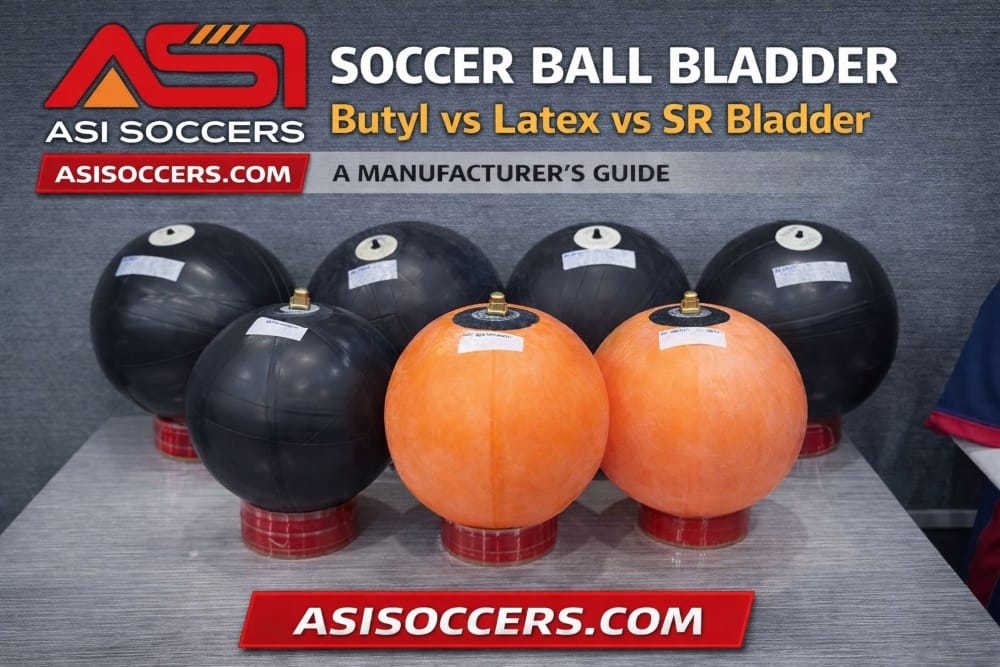
Traditionally, there are three main types of bladder used in the bladder of a soccer ball: butyl, latex, and synthetic rubber. Today, manufacturers may also use hybrid constructions that blend characteristics of these materials to achieve specific performance targets. However, each of the three base materials behaves differently at a molecular and mechanical level, and those differences directly influence energy return, air retention, durability, and perceived feel.
1- Butyl Bladder
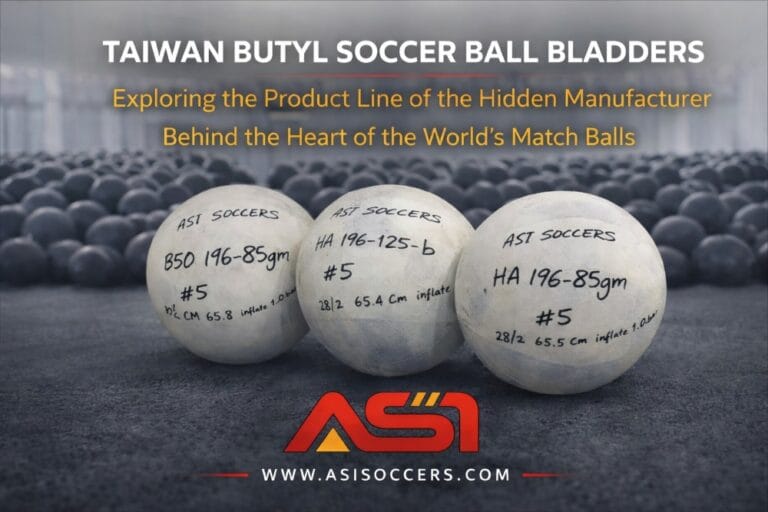
A butyl bladder is made from butyl rubber, technically known as isobutylene isoprene rubber (IIR). This synthetic elastomer is widely used in the sports industry because of its extremely low gas permeability. In simple terms, a butyl rubber bladder holds air better than almost any other commonly used rubber in soccer balls.
Air loss occurs through a process called gas diffusion. Gas molecules inside the ball naturally attempt to migrate through the rubber material. The rate at which they escape depends on the density and structure of the polymer chains. Butyl rubber has tightly packed molecular chains with very low free volume between them. Because of this dense structure, air molecules struggle to pass through, making the butyl bladder soccer ball the strongest option for long-term air retention.
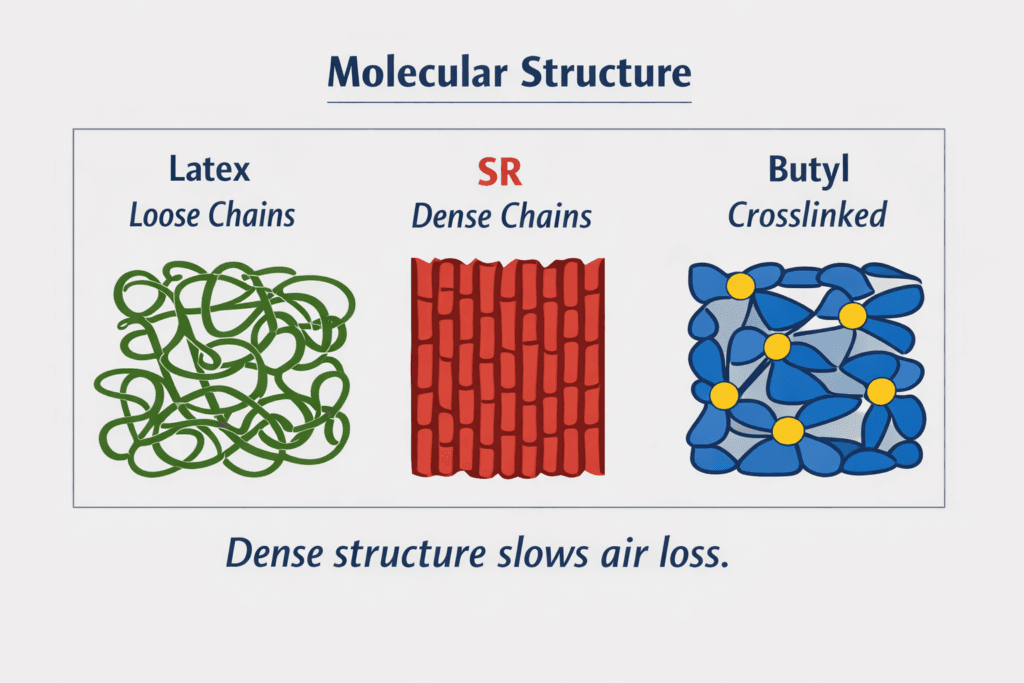
This superior retention makes the butyl bladder ball ideal for training environments, schools, and recreational use where frequent reinflation is not practical.
However, the same dense molecular structure that improves air retention also affects mechanical behavior. Butyl rubber exhibits higher internal damping and higher hysteresis compared to latex. When a butyl bladder football is kicked, the material compresses and absorbs some of the impact energy internally. A portion of that energy is dissipated as heat rather than returned immediately to ball motion. The result is a more controlled, slightly firmer feel.
It is important to note that a butyl bladder soccer ball can still meet rebound standards. The difference lies in the dynamic energy return during high-speed impact. Because slightly more force is required to achieve the same travel distance, players may perceive the ball as firmer or heavier, even though its actual weight remains unchanged.
For durability, stability, and minimal maintenance, the butyl rubber bladder remains the industry standard for training and recreational balls.
2- Latex Bladder
A latex bladder football uses natural rubber, chemically known as cis-1,4 polyisoprene. Unlike butyl rubber, latex has more flexible polymer chains and greater chain mobility. Its molecular structure is less densely packed, which means it allows gas to diffuse more easily. This is why a latex bladder soccer ball requires more frequent inflation.
While latex sacrifices air retention, it offers superior elasticity. Natural rubber has lower internal damping and higher resilience. Resilience refers to the amount of energy a material returns after being deformed. When a latex bladder is compressed during a kick, its polymer chains stretch and recoil rapidly, returning a greater portion of the stored energy.
This faster elastic recovery produces a softer initial touch and a more explosive rebound sensation. Many professional players describe a latex bladder football as feeling “alive” because of this responsive behavior.
In professional match environments, where balls are checked and inflated before every session, air retention is less critical than performance feel. For this reason, latex bladder soccer balls are commonly used in high-level match balls where touch, rebound consistency, and shot feedback are prioritized over long-term pressure stability.
3- SR Bladder (Synthetic Rubber Bladder)
An SR bladder, or synthetic rubber bladder, is engineered to bridge the performance gap between butyl and latex. Manufacturers formulate SR compounds using engineered elastomers such as synthetic polyisoprene, SBR, or polybutadiene-based materials. The goal is to replicate much of the elasticity of latex while improving durability and air retention.
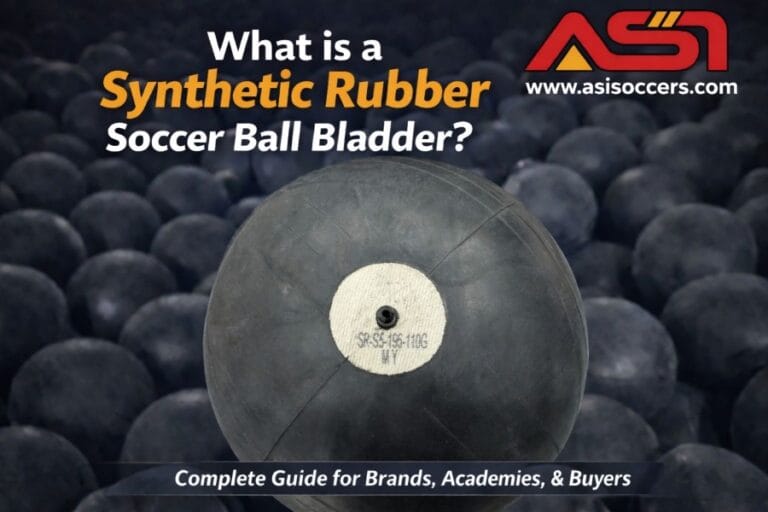
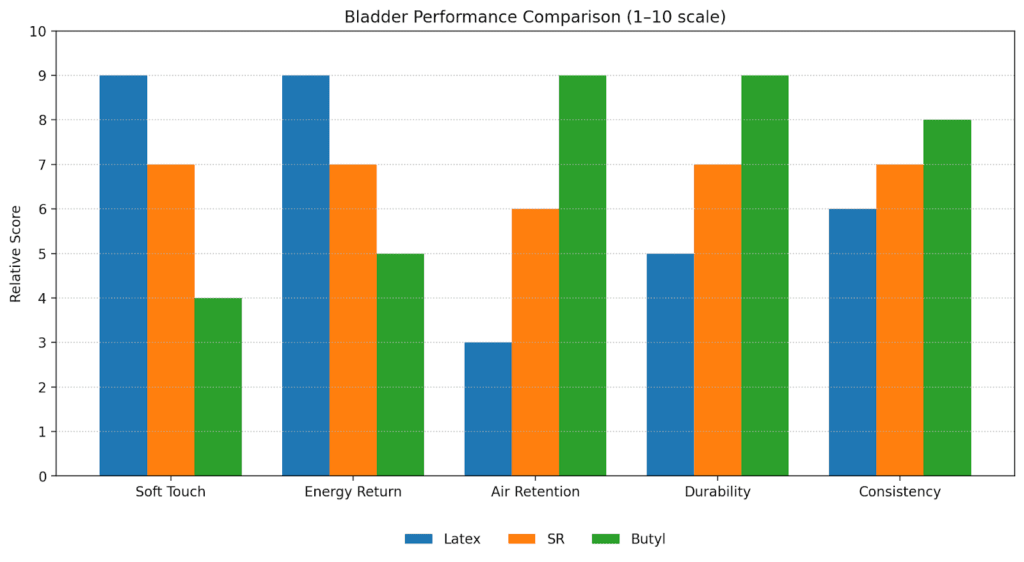
Butyl and latex represent opposite ends of the performance spectrum. Butyl emphasizes air retention and structural stability, while latex emphasizes energy return and liveliness. The SR bladder was developed to provide a balanced middle ground.
A high-quality SR bladder typically delivers better air retention than a latex bladder soccer ball and greater elasticity than a butyl bladder soccer ball. Its hysteresis behavior can be engineered to offer controlled damping while still maintaining strong rebound performance. This balance makes SR bladder constructions popular in match-level balls used in schools and colleges, where the same ball may be used for both training and competitive play.
In these environments, consistency, moderate air retention, and stable rebound characteristics are all important. An SR bladder provides that equilibrium.
Hybrid Bladders
Modern manufacturers may also combine material layers to create hybrid soccer bladder systems. For example, butyl components may be used to improve air retention, while synthetic rubber elements enhance elasticity. We will cover these hybrid bladders in a different article. These hybrid constructions allow brands to fine-tune performance based on specific market requirements.
Rather than asking which bladder is best, the correct question is which bladder is best for the intended use case.
Choosing the Right Bladder of a Soccer Ball
There is no universal answer to which soccer ball bladder is superior. The optimal choice depends entirely on the application.
If long-term air retention and durability are the priority, a butyl rubber bladder is the most practical solution. If elite responsiveness and lively feel are required in a controlled environment, a latex bladder football provides superior energy return. If a balanced solution is needed between performance and maintenance, an SR bladder offers a strong compromise.
At ASI Soccers, we design every ball from the inside out. We first understand how the ball will be used, who will use it, and what performance characteristics are required. Only then do we select the appropriate bladder configuration. Our goal is not simply to manufacture soccer balls, but to engineer soccer balls that perform according to the needs of our clients.
👉 If you are a brand owner, league, organization, or club looking for guidance on selecting the right soccer ball bladder, our team is ready to assist!