
Insight into the Football Manufacturing Industry in Sialkot: History, Quality Standards & Global Impact
If you’ve ever watched a World Cup final, a local league match, or even a neighborhood kickabout, there is a statistically staggering chance that the ball being kicked started its life in a single, bustling city in Pakistan. Welcome to Sialkot—the undisputed “Silicon Valley of Soccer.”
But how did a city in Punjab become the heartbeat of the global football manufacturing industry in Sialkot? It wasn’t an overnight miracle; it’s a story of grit, accidental history, and a level of craftsmanship that makes even the most sophisticated robots look like amateurs.
The “Accidental” History: How Sialkot Got Its Kick
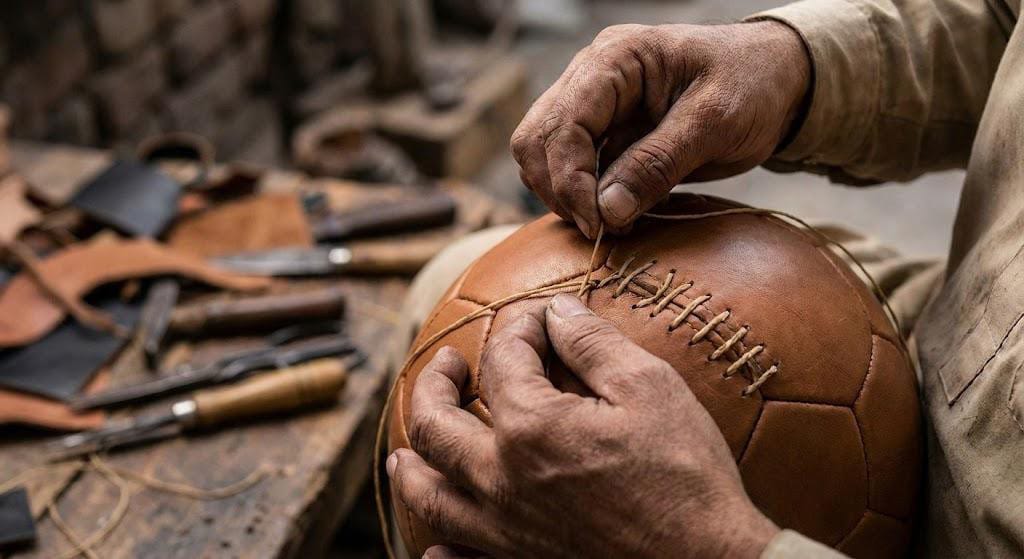
The story begins in the late 19th century, during the British colonial era. Legend has it that a British soldier punctured his leather football and took it to a local saddle-maker in Sialkot to be repaired. The craftsman didn’t just fix it—he improved it.
Seeing an opportunity, local artisans began replicating the balls, and by 1906—the same year ASI Soccer‘s roots began to take hold in the spirit of the region—the industry was officially born. What started as a niche craft for bored soldiers transformed into a global powerhouse.
By the 1980s, Sialkot was producing the majority of the world’s hand-stitched balls. Today, this city accounts for roughly 70% of the world’s total production. When you hold a ball from a Sialkot soccer ball factory, you aren’t just holding sports equipment; you’re holding a century of refined tradition.
Why Global Brands Bet on Sialkot
Why do the world’s biggest sports brands—the ones with billion-dollar budgets—keep coming back to this specific corner of Pakistan? It’s not just about the price; it’s about the “Sialkot Secret Sauce.”
- Generational Expertise: In Sialkot, ball-making is a family trade. The precision required to stitch a perfect sphere is passed down from parents to children.
- Scalability: Whether it’s 500 balls for a local club or 50,000 for a global tournament, the infrastructure here is unrivaled.
- Adaptability: From the heavy leather “brown bombs” of the 1950s to the aerodynamic, thermo-bonded masterpieces of today, Sialkot has never been afraid to evolve.
Global brands trust a custom football manufacturer in Pakistan because they know that Sialkot manufacturers don’t just follow blueprints; they understand the physics of the game.
The Anatomy of a Masterpiece: Materials & Craftsmanship
The sports ball manufacturing process is a fascinating blend of chemistry, geometry, and manual labor. A modern football is far more than just “air inside leather.”
1. The Bladder
The heart of the ball. Most high-end balls use latex bladders for the best “bounce” and responsiveness, while butyl bladders are used for superior air retention.
2. The Lining
Between the bladder and the outer cover are layers of polyester or cotton. These layers provide the ball’s strength, structure, and shape retention. High-quality balls often have four or more layers.
3. The Cover (The Skin)
Modern balls are made from synthetic materials, such as polyurethane (PU) or PVC. PU is the gold standard because it stays soft in cold weather and offers a better “touch” for players.
4. The Stitching
- Hand-Stitching: The classic method. It provides deeper seams and incredible durability.
- Machine-Stitching: Faster and more cost-effective for training balls.
- Thermo-Bonding: The latest tech, where panels are glued together using heat, making the ball nearly waterproof and perfectly spherical.
Decoding Quality Standards: FIFA & Beyond
In the world of professional football, a “good ball” isn’t enough—it has to be perfect. This is where a FIFA-quality football manufacturer proves their worth. To get that prestigious FIFA stamp, a ball must pass a battery of brutal tests.
| Test Category | FIFA Quality Pro Requirements |
| Weight | 420g – 445g |
| Circumference | 68.5cm – 69.5cm |
| Sphericity | Max 1.5% deviation |
| Water Absorption | Max 10% weight increase |
| Rebound | 135cm – 155cm (at 20°C) |
| Loss of Pressure | Max 20% |
These standards ensure that whether the game is played in the humid heat of Brazil or a rainy night in Stoke, the ball performs the same way every time.
Innovation: This Isn’t Your Grandfather’s Ball
The football manufacturing industry in Sialkot has moved far beyond the needle and thread. Today, the city is a hub of technological innovation.
We are seeing the rise of “Smart Balls” embedded with NFC chips to track speed and trajectory. Furthermore, there is a massive shift toward sustainability. Manufacturers are now experimenting with recycled polyester and water-based inks to reduce the environmental footprint of the world’s most popular sport.
ASI Soccer: Designing the Future of the Pitch
Among the titans of the industry, ASI Soccer stands out by blending traditional craftsmanship with a modern, consumer-driven design strategy. Since 2006, the company has focused on translating marketing goals into high-performance equipment.
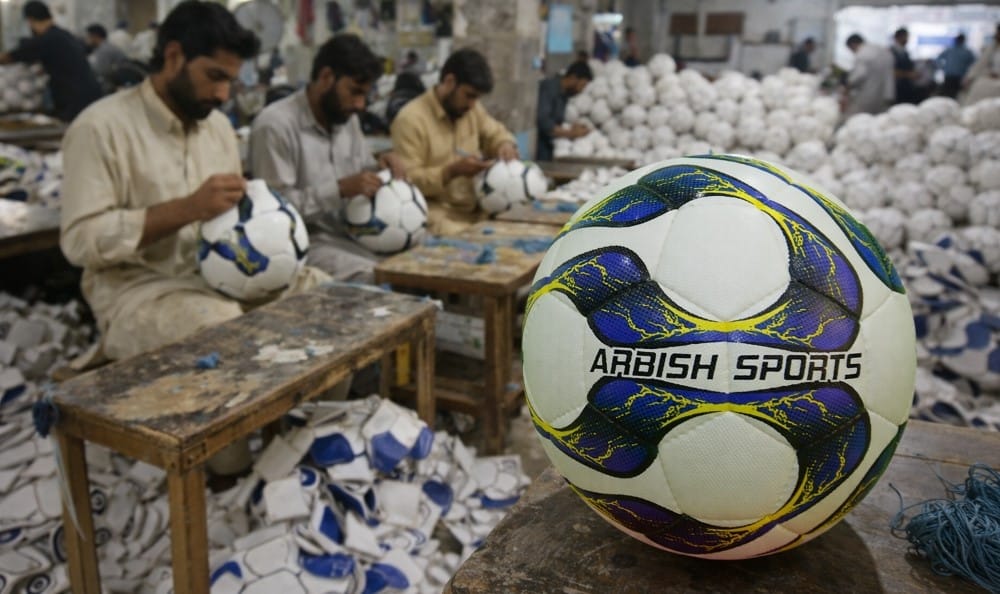
As a leading custom football manufacturer in Pakistan, ASI Soccer doesn’t just produce balls; they provide a comprehensive design strategy. With a manufacturing capacity of 20,000 to 30,000 balls per month, they have the muscle to handle large-scale orders while maintaining the boutique attention to detail that customized products require. Whether it’s soccer, rugby, or cricket, ASI Soccer (asisoccers.com) bridges the gap between premium quality and reasonable pricing, making professional-grade gear accessible to everyone from pro athletes to ambitious entrepreneurs.
Global Impact: Sialkot’s Gift to the World
The economic impact of the football manufacturing industry in Sialkot is staggering. It provides livelihoods for hundreds of thousands of people and remains one of Pakistan’s most significant export sectors.
But the impact is more than just financial; it’s cultural. Every time a kid in a remote village or a superstar in a 100,000-seat stadium kicks a ball, they are connecting with the hands of the craftsmen in Sialkot. The city has survived global economic shifts and the rise of automation elsewhere because the world knows that for a ball to have “soul,” it needs the Sialkot touch.
Frequently Asked Questions (FAQ)
Q: Why are most footballs made in Sialkot?
A: Sialkot offers a unique combination of century-old craftsmanship, a massive dedicated workforce, and a specialized supply chain that makes it the most efficient place on earth to produce high-quality sports balls.
Q: Is hand-stitched better than thermo-bonded?
A: It depends on the use! Hand-stitched balls are incredibly durable and great for all-weather play. Thermo-bonded balls are preferred for professional matches because they are more aerodynamic and have zero water intake.
Q: Why are most footballs made in Sialkot?
A: By following strict international standards and utilizing a “design-oriented” approach, ASI Soccer ensures every ball meets the specific performance needs of the athlete, from the bladder quality to the final seam.
The football manufacturing industry in Sialkot is a testament to what happens when tradition meets innovation. From the first repaired leather ball in 1889 to the high-tech, aerodynamic wonders of today, Sialkot remains the undisputed king of the pitch.
Whether you are a startup sports brand or a professional league, partnering with an expert like ASI Soccer ensures you are getting a piece of that legendary Sialkot heritage at a price that makes sense for your business.
Ready to gear up?
- Check out our Soccer Ball Range
- Explore Custom Keeper Gloves
- Contact us for Wholesale Inquiries